What Does BIS for PVC Homopolymers Cover?
India’s regulatory approach to imported and locally manufactured raw materials is evolving, and one of the most consequential changes is the mandatory BIS Certification for PVC Homopolymers.
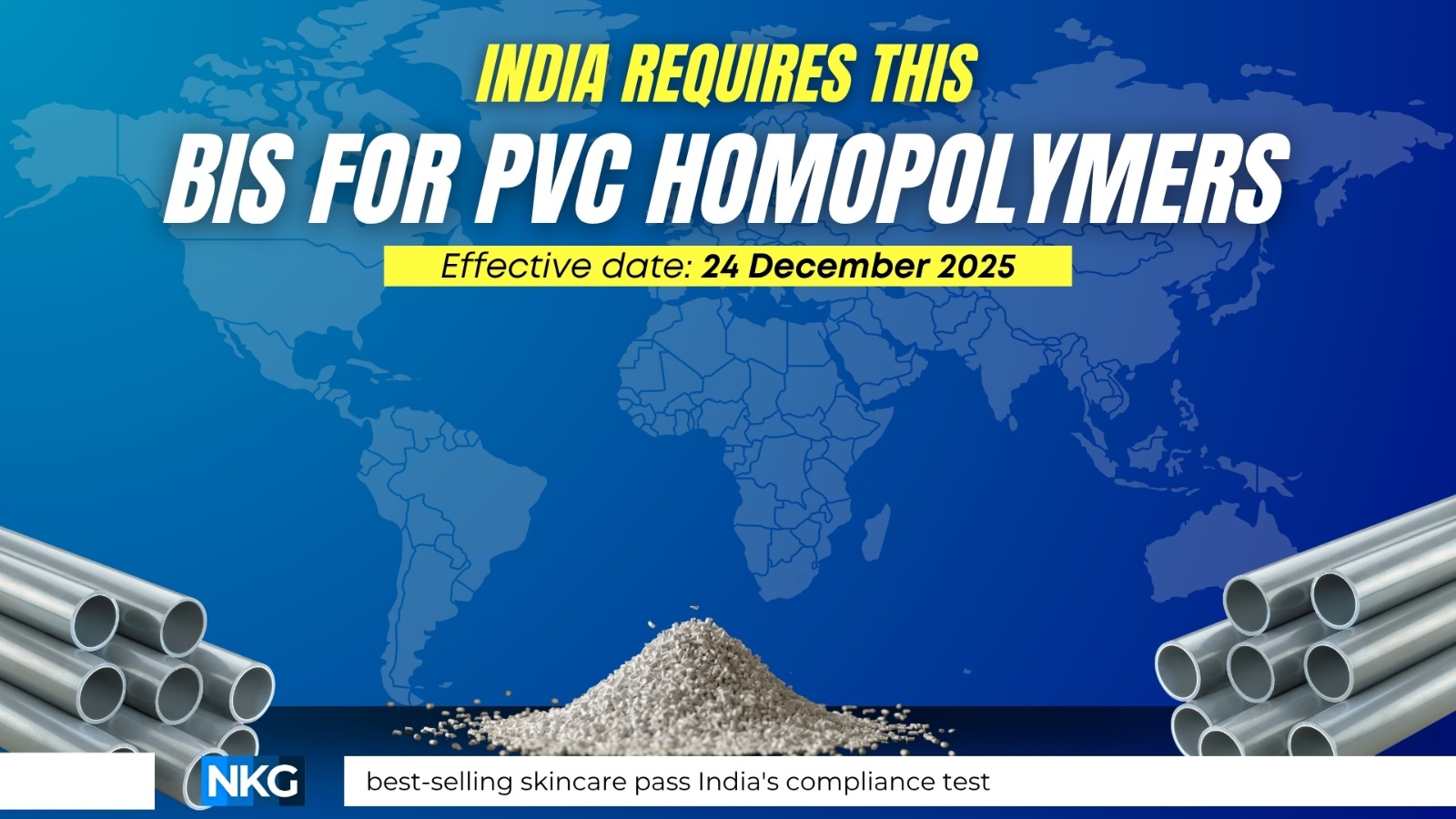
Originally notified in February 2024 under a Quality Control Order for PVC Homopolymers, this mandate has undergone multiple extensions, the latest being issued by the Ministry of Chemicals and Fertilizers in June 2025. With this latest update, the effective date for enforcement is now confirmed as 24 December 2025.
Under this regulation, all covered material must conform to the Indian Standard IS 17658:2021, and no product can be manufactured, imported, stored, or sold in India without a valid BIS license and the PVC Homopolymers ISI Mark.
Whether you are a foreign supplier, Indian manufacturer, or importer, this update has direct implications on licensing, labeling, and compliance documentation. In this blog, we break down exactly what you need to know, from certification steps to enforcement risk, to stay ahead of the deadline.
What Does the BIS Mandate Cover?
The BIS Certification for PVC Homopolymers ensures that PVC suspension resin used in products such as wires, profiles, medical items, films, and footwear meets uniform technical and safety specifications. Compliance is now compulsory for:
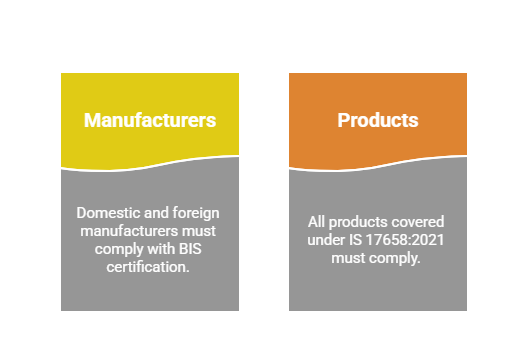
Licensing is granted only after product sampling, testing, and, for foreign manufacturers, a BIS-led factory audit.
Understanding the Standard: IS 17658:2021
The applicable standard, IS 17658:2021, outlines key performance and safety parameters for suspension-grade PVC. These include:
- K-Value testing (for viscosity and molecular weight)
- Visual appearance and impurity levels
- Restrictions on volatile content
- Residual Vinyl Chloride Monomer (RVCM) limits
Adherence to this standard ensures that materials meet Indian safety, processing, and environmental thresholds.
Compliance Timeline: What You Need to Know
The current effective date, 24 December 2025, provides a clear but limited window to complete your licensing and supply chain realignment. Companies are advised to initiate the process no later than Q3 2025 to avoid clearance delays or port rejections.
Once the deadline passes, non-compliant material will not be cleared by Indian customs or allowed for sale in the domestic market.
What Foreign Manufacturers Must Do
Companies outside India intending to export to India must follow the BIS Foreign Manufacturers Certification Scheme (FMCS). This involves:
- Filing a license application with BIS
- Submitting product samples for lab testing
- Undergoing a factory inspection by BIS officers
- Demonstrating ongoing quality control and traceability
Once approved, manufacturers will be authorized to use the PVC Homopolymers ISI Mark on compliant products. This mark is mandatory to indicate conformity and legality for Indian sales.
Indian Importers: Your Role Is Just As Critical
Importers and Indian buyers must verify that:
- Their suppliers are BIS licensed
- Product packaging includes the PVC Homopolymers ISI Mark
- Documentation is available to support customs clearance and market surveillance
Failure to meet these requirements post-deadline could lead to detentions, loss of goods, and penalties under the BIS Act, 2016.
What the ISI Mark Really Signifies
The PVC Homopolymers ISI Mark is more than just a label. It signals:
- Verified compliance with IS 17658:2021
- Approval by the Indian standards body
- Legal acceptance for use, import, and sale in India
In the absence of this mark, products will be deemed non-compliant regardless of their international certifications.
Summary of What You Need to Do
| Compliance Task | Who It’s For | Deadline Target |
|---|---|---|
| Apply for BIS certification | Foreign & Indian manufacturers | Based on the audit schedule |
| Prepare samples for BIS-approved testing | All applicants | As early as possible |
| Undergo factory inspection (foreign only) | Exporters to India | Based on audit schedule |
| Begin ISI Mark packaging and labeling | Licensed suppliers | Before shipping post-certification |
| Verify supply chain compliance | Indian importers | Before December 2025 |
Conclusion: Secure Your License Before the Clock Runs Out
The BIS Certification for PVC Homopolymers is no longer an optional quality mark; it’s now a mandatory compliance gate for entry into India’s growing polymer market. With the effective date set as 24 December 2025, this is the right time to initiate your license process, upgrade your packaging, and align your documentation.
Whether you’re a foreign supplier or an Indian distributor, ignoring this timeline could result in costly delays and business losses. Compliance takes time; don’t wait for the deadline.
Need Guidance on BIS Licensing?
NKG Advisory supports manufacturers and global suppliers in navigating India’s complex compliance requirements. From BIS documentation and testing to audit coordination and ISI Mark implementation, we ensure you’re fully compliant before enforcement.
📩 Contact our regulatory team today to get started.
And if you are looking for more insights on compliance, certifications, and industry updates? Explore our blog page for expert guidance and actionable information. Visit Now