Introduction
The Furniture Quality Control Order establishes mandatory BIS certification requirements for specified categories of furniture in India. For manufacturers and importers, the central compliance question is operational: does the Order apply to your product, and if yes, what must be completed before domestic market entry?
The framework shifts compliance to a pre-market condition. Certification is not optional for covered products. It becomes a regulatory prerequisite.
What Is the Furniture Quality Control Order?
The Furniture Quality Control Order was notified by the Ministry of Commerce and Industry under the Bureau of Indian Standards Act, 2016. It mandates that specified furniture products conform to relevant Indian Standards and bear the BIS Standard Mark before being sold in the domestic market.
The objective is to ensure structural safety, durability, and uniform quality across regulated product categories. Once enforcement applies to a product class, non-certified goods cannot be lawfully manufactured for sale, displayed for sale, or imported for domestic distribution.
In February 2026, an amendment was issued to clarify transitional and operational provisions. This amendment introduced structured allowances but did not remove certification obligations.
Regulatory Timeline
To understand implementation, the timeline is important:
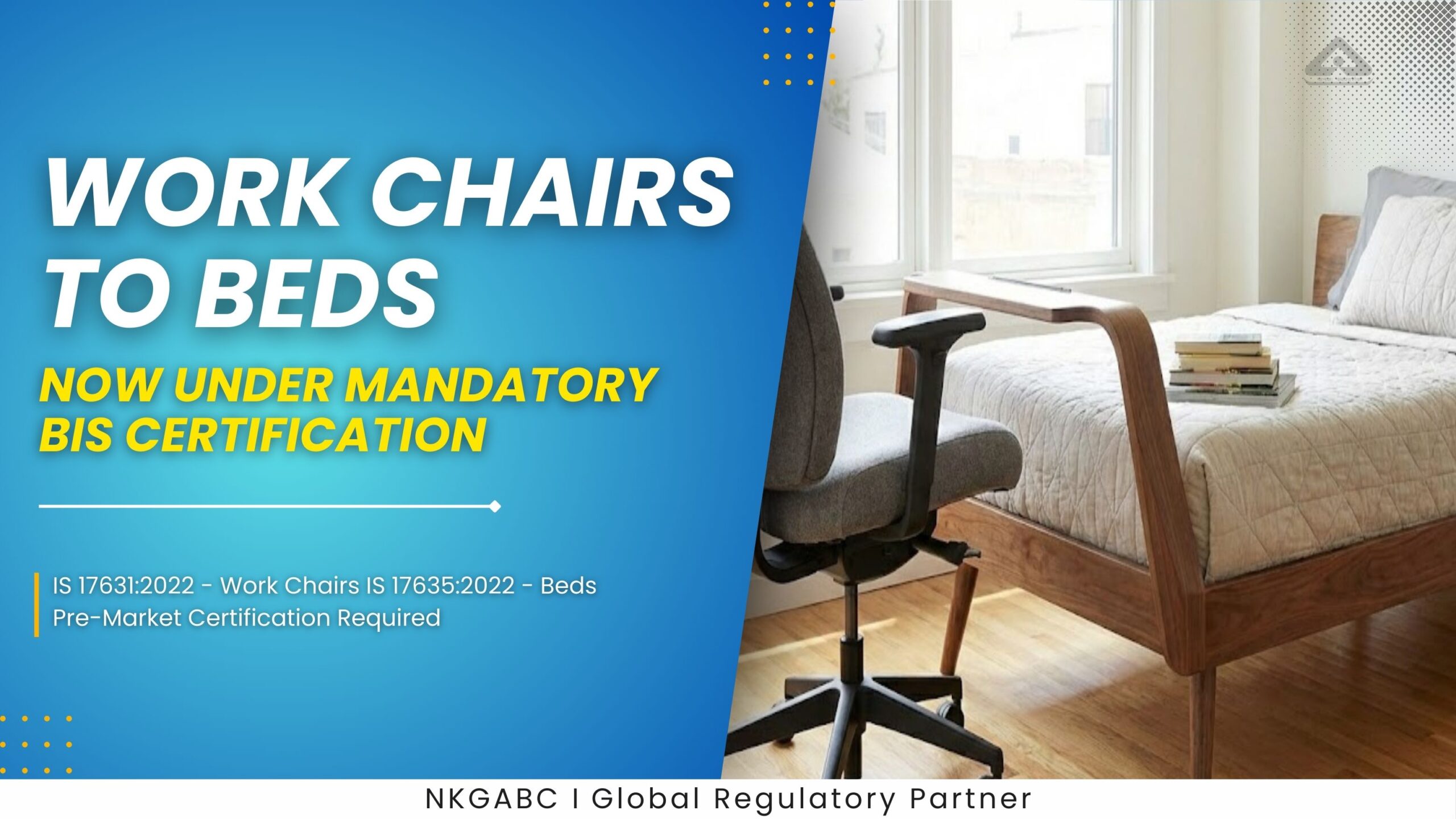
IS 17631:2022 – Work Chairs
This standard defines safety and structural performance requirements for work chairs and forms part of the compulsory certification list.
Furniture (Quality Control) Order – S.O. 801 (E), dated 14 February 2025
Introduced mandatory BIS certification for specified furniture categories.
Furniture (Quality Control) Amendment – S.O. 774 (E), dated 13 February 2026
Inserted additional provisos concerning R&D imports, pre-implementation stock, and export-only imports.
Official Gazette References:
Furniture (Quality Control) Order – S.O. 801 (E)
Furniture (Quality Control) Amendment – S.O. 774 (E)
Which Products Are Covered?
The furniture QCO applicability extends to the following categories:
• Work Chairs – IS 17631:2022
• General Purpose Chairs & Stools – IS 17632:2022
• Tables & Desks – IS 17633:2022
• Storage Units – IS 17634:2022
• Beds – IS 17635:2022
• Bunk Beds – IS 17636:2022
If your product aligns with any of these standards, it falls within the regulatory scope of the Furniture Quality Control Order for domestic market purposes.
Accurate product classification is critical. Misclassification may result in delayed certification or enforcement exposure.
Is BIS Certification Mandatory?
For the covered categories, mandatory BIS certification for furniture applies prior to:
• Commercial production
• Domestic sale or display
• Import for Indian market distribution
Certification is granted under BIS Scheme-I (ISI Mark Scheme). From an operational standpoint, this involves:
• Filing application with BIS
• Product testing as per the applicable Indian Standard
• Factory inspection
• Grant of license before commercial release
Manufacturers should integrate certification timelines into production planning. Importers must verify that overseas suppliers hold valid BIS licenses before shipment.
What Did the 2026 Amendment Clarify?
The 2026 amendment to the Furniture Quality Control Order addressed practical implementation concerns.
R&D Imports: Certified manufacturers, or those who have applied for certification, may import up to 200 units per financial year for research and development. These goods cannot be sold commercially and must be disposed of as scrap. Records must be maintained and furnished when required.
Pre-Implementation Stock: Stock manufactured or imported before the implementation date may be sold or displayed for up to twelve months from enforcement, subject to declaration requirements.
Export-Only Imports: Non-BIS-marked goods or components may be imported for export manufacturing, provided they are not diverted into the domestic market and proper undertakings are submitted.
These provisions provide structured operational flexibility without diluting certification requirements for domestic sale.
How Should Manufacturers Prepare?
Manufacturers should:
- Map each product to the applicable IS standard.
- Evaluate facility readiness for BIS inspection.
- Initiate certification well before the planned market launch.
- Identify and declare pre-implementation stock if applicable.
- Maintain documentation systems for audit verification.
Certification should be treated as a pre-production compliance checkpoint rather than a post-manufacturing formality.
The Government also issued Amendments in Quality Control Orders, 2026 (S.O. 777(E), dated 12 February 2026), which apply across several notified Quality Control Orders, including the Furniture (Quality Control) Order, 2025. This amendment does not modify the product scope or the applicable Indian Standards. Instead, it substitutes the proviso under Paragraph 2 to clarify the eligibility conditions for certain micro and small enterprises registered on the Udyam Portal, subject to prescribed investment and turnover thresholds.
What Should Importers Verify?
Importers should confirm:
• Whether the product is covered under notified standards.
• Whether the foreign manufacturer holds a valid BIS license.
• Whether export-only imports are supported with required undertakings.
• Whether documentation aligns with customs compliance requirements.
Non-compliant goods may face detention or enforcement action under the BIS Act.
Operational Takeaway
The Furniture Quality Control Order creates a defined regulatory threshold for domestic market access. The amendment issued in 2026 clarifies specific operational situations but does not remove the obligation to obtain certification for covered products.
If your product falls within the notified standards, BIS certification under Scheme-I is required before domestic commercialization. Aligning manufacturing timelines, procurement decisions, and import processes with this framework reduces compliance risk and ensures uninterrupted market access.
In compliance, staying informed is the first step to staying prepared. For BIS registration or factory audit support, reach us at www.nkgabc.com or email navraj@nkgabc.com.
To stay updated with more insights on compliance, certifications, and industry trends, explore our blog page or connect with us on LinkedIn for regular updates.