Introduction
Recent regulatory developments have prompted manufacturers, importers, and compliance professionals to revisit how Lauric Acid is positioned within India’s quality control ecosystem. Lauric Acid is technically covered under IS 10931:1984, the Indian Standard that specifies quality requirements for this oleochemical. While updates to Quality Control Orders often appear straightforward at first glance, their legal effect depends on precise interpretation. In this context, clarity around the Lauric Acid BIS QCO status is essential, not only to understand what has formally changed, but also to assess how businesses should align quality systems, import documentation, and contractual commitments during this regulatory transition.
Why Lauric Acid Attracts Regulatory Review
Lauric Acid is a high-volume oleochemical with extensive downstream use across soaps and detergents, cosmetics and personal care, pharmaceuticals, food processing aids, and multiple industrial applications. Materials with such cross-sector relevance and import dependence naturally attract regulatory attention, particularly where consistency, safety, and traceability can affect a wide range of end products.
Under India’s regulatory approach, substances that form critical inputs across industries are periodically reviewed to determine whether mandatory conformity assessment is proportionate, enforceable, and aligned with market readiness.
What Changed Under the Quality Control Order Framework
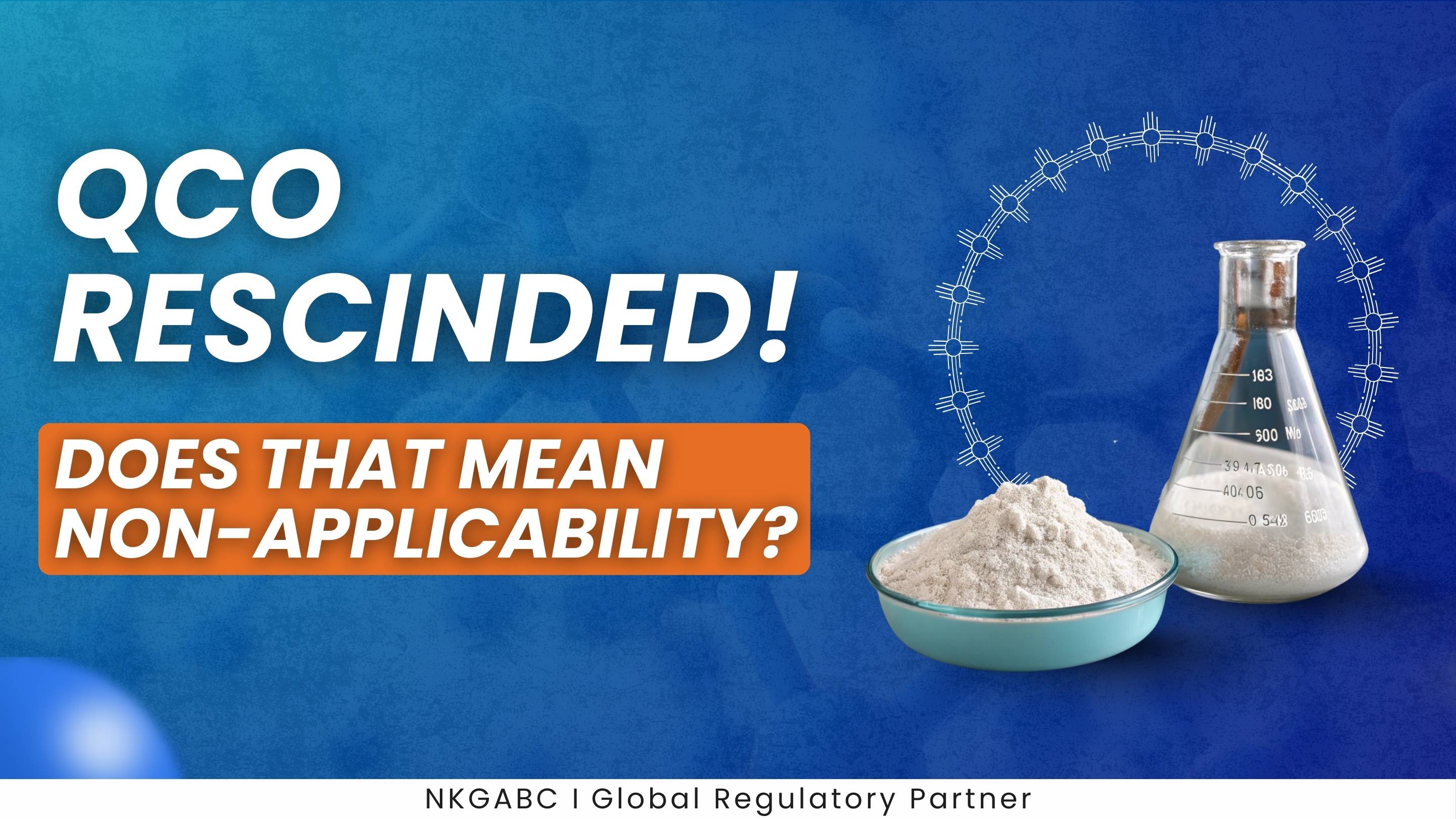
India’s Quality Control Order mechanism allows the government to mandate conformity with Indian Standards for notified products. In the case of Lauric Acid, the regulatory position has shifted because the notification issuing the Quality Control Order has been rescinded.
This change is legal and procedural in nature. It means that the specific notification intended to bring Lauric Acid under mandatory QCO enforcement is no longer in force. Importantly, this action should not be interpreted as a withdrawal of regulatory oversight or a policy reversal on quality standards.
Key aspects to note:
- The rescission applies only to the issuing notification, not to the underlying Indian Standards.
- It reflects a phase of regulatory reassessment or transition.
- It does not rule out future regulatory action under a revised or reintroduced framework.
Correct Legal Interpretation of the Current Status
A rescinded notification does not equate to deregulation. From a compliance perspective, it signals that mandatory enforcement under that particular QCO is not currently active, while the broader quality framework remains intact.
Understanding the Lauric Acid BIS QCO status, therefore, requires separating enforceability from relevance. Indian Standards continue to exist as technical references and may still influence:
- Buyer and customer specifications
- Tender and procurement conditions
- Internal quality benchmarks
- Third-party audits and supplier qualification processes
This distinction is critical for avoiding overcorrection in compliance planning.
Product Coverage – Contextual Reference Only
While this article focuses on Lauric Acid, it is often discussed alongside other oleochemical products in regulatory and trade conversations. These are included below for informational context only.
| Product Category | Description |
|---|---|
| Lauric Acid | Modified fatty acids are used in specialised industrial formulations |
| Acid Oil | By-product of vegetable oil refining, used in feed and industrial applications |
| Palm Fatty Acids | Fatty acids derived from palm oil for soaps and surfactants |
| Rice Bran Fatty Acids | Fatty acids obtained from rice bran oil processing |
| Coconut Fatty Acids | Fatty acid mixtures derived from coconut oil |
| Hydrogenated Rice Bran Fatty Acids | Modified fatty acids used in specialised industrial formulations |
NOTE: “The notification issuing the Quality Control Order has been rescinded.” This clarification applies strictly to the issuing notification and should not be read as a withdrawal of standards or a permanent exemption from quality expectations.
Official Regulatory Reference
Stakeholders should rely on the consolidated Government of India Gazette notification confirming the rescission of the QCO-issuing notification. This document remains the authoritative legal reference for determining current enforceability and for aligning internal compliance and trade decisions.
What This Means in Practice for Industry
Does This Remove BIS Relevance?
No. The absence of active mandatory enforcement under a rescinded notification does not remove the relevance of the Bureau of Indian Standards. Indian Standards may continue to shape market expectations through:
- Customer quality requirements
- Contractual clauses
- Risk-based assessments adopted by buyers and auditors
For businesses supplying multiple regulated sectors, these expectations often remain influential even without a live QCO.
Impact on Imports and Trade Operations
For importers, lauric acid import compliance India continues to be a practical consideration. Although mandatory BIS certification is not triggered by a rescinded notification, import clearance processes may still involve scrutiny of:
- Product specifications
- Test reports and certificates of analysis
- Consistency with declared technical parameters
From an operational standpoint, maintaining clear and traceable documentation helps reduce friction at ports and during downstream customer reviews.
Certification Expectations
Industry questions around lauric acid bis certification requirements typically arise from the assumption that standards disappear when a QCO is rescinded. In practice, certification may not be mandatory under the current legal position, but voluntary alignment or readiness strategies are often adopted to:
- Support buyer confidence
- Maintain consistency across export-oriented supply chains
- Prepare for possible future regulatory reintroduction
Such measures are strategic safeguards rather than compliance excess.
Applicability and Ongoing Interpretation
One of the most common areas of confusion relates to lauric acid QCO applicability India, specifically whether the product remains “covered” in any form. The correct reading is that applicability under the rescinded notification no longer operates as a mandatory trigger, but the product itself remains within the broader regulatory and quality ecosystem.
This is where interpretation, rather than headline reading, becomes decisive.
How Industry Should Respond During This Phase
Businesses handling Lauric Acid should adopt a balanced and forward-looking approach:
- Avoid assuming long-term exemption based solely on rescission
- Maintain quality documentation aligned with relevant standards
- Monitor regulatory signals, consultations, and draft notifications
- Ensure alignment between procurement, quality, and compliance teams
This approach reduces exposure to sudden regulatory shifts and supports continuity across supply chains.
Interpretation Over Headlines
Many compliance challenges arise not from regulatory change itself, but from how that change is interpreted internally. Seeking lauric acid regulatory interpretation, India reflects a mature compliance mindset, one that looks beyond surface-level updates to understand legal effect, trade impact, and future readiness.
Closing Insight from NKG Advisory
At NKG Advisory, we advise clients to view QCO rescissions as part of an ongoing regulatory lifecycle rather than as endpoints. For materials like Lauric Acid, disciplined interpretation, documentation readiness, and continued alignment with Indian Standards help businesses remain credible, resilient, and prepared, regardless of how the framework evolves. Understanding the Lauric Acid BIS QCO status in its correct legal and operational context enables informed decision-making without unnecessary compliance risk.
In compliance, staying informed is the first step to staying prepared. For BIS registration or factory audit support, reach us at www.nkgabc.com or email navraj@nkgabc.com.
To stay updated with more insights on compliance, certifications, and industry trends, explore our blog page or connect with us on LinkedIn for regular updates.