Introduction
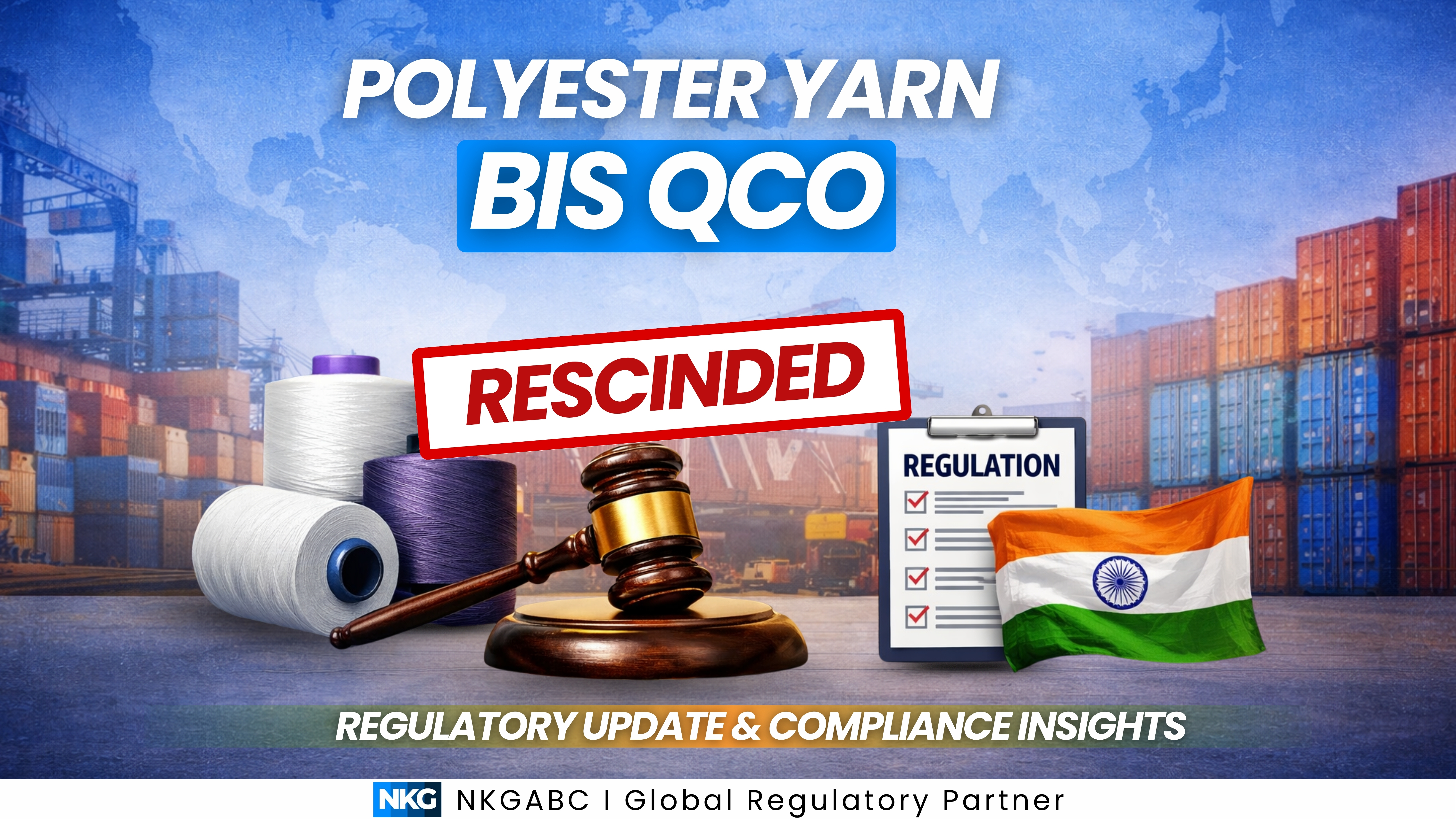
Polyester Yarn BIS QCO Status has become a key point of interpretation for textile manufacturers, fibre producers, importers, and compliance professionals following recent regulatory developments. For polyester yarns and fibres, the issuing notification under the Quality Control Order (QCO) framework has been formally rescinded. This change requires careful legal reading. It does not represent a policy withdrawal from quality oversight, but a regulatory transition that affects how conformity obligations are presently applied and understood.
Why Polyester Yarns & Fibres Attract Regulatory Review
Polyester yarns and fibres form the backbone of India’s textile and industrial fabric ecosystem. From apparel and home textiles to technical textiles, automotive fabrics, and industrial applications, polyester inputs influence downstream product strength, consistency, and performance. Because these materials are traded at scale, both domestically manufactured and imported, their quality and traceability have historically drawn regulatory attention.
When polyester yarns and fibres were earlier considered under the QCO framework, the intent was to evaluate standardisation readiness across diverse grades, end uses, and supply chains. Any change in their regulatory positioning, therefore, needs to be interpreted as part of an ongoing assessment process rather than a permanent policy conclusion.
What Changed Under the QCO Framework
For the polyester yarn and fibre category, the issuing notification has been rescinded. This means the specific notification that would have operationalised mandatory compliance under the QCO framework is no longer in force.
From a legal standpoint, this distinction is critical. A rescinded issuing notification is not the same as a QCO being withdrawn with rescission, nor does it equate to an exemption declaration. It reflects a pause or reassessment in how and when mandatory conformity requirements should be enforced for the category.
Understanding this nuance is central to any accurate reading of polyester yarn BIS QCO status in the current phase.
Correct Legal Interpretation of “Issuing Notification Rescinded”
Under India’s regulatory structure, QCOs rely on issuing notifications to activate enforceable compliance obligations. When such a notification is rescinded:
- Mandatory certification requirements under that notification do not currently apply
- The underlying standards and regulatory interest remain relevant
- The category remains visible within the quality control ecosystem
This is why BIS QCO polyester yarn interpretation must be grounded in legal precision rather than assumption. The absence of an active notification should not be read as deregulation or permanent removal from future oversight.
Polyester Yarns & Fibres Covered Under the Regulatory Review
| Product Category | Description |
|---|---|
| Polyester Spun Grey & White Yarn (PSY) | Continuous filament yarns used in apparel, home furnishing, and fabric manufacturing |
| Polyester Fully Drawn Yarn (FDY) | Continuous filament yarns used in apparel, home furnishing, and fabric manufacturing |
| Polyester Industrial Yarn (IDY) | High-tenacity yarns designed for industrial, technical, and reinforcement applications |
| Polyester Partially Oriented Yarn (POY) | Intermediate filament yarn used as feedstock for texturising and further processing |
| Polyester Staple Fibre (PSF) | Fibres used in spinning, nonwovens, fillings, and blended textile products |
Regulatory Note and Official References
For all the above polyester yarns and fibres, the issuing notification under the Quality Control Order framework has been rescinded. This position is based on official rescission orders issued against the corresponding Indian Standards. The rescission applies to the issuing notifications only and should not be interpreted as withdrawal of the underlying standards or regulatory relevance.
Official BIS Rescission Orders (PDFs):
- IS 17265:2019 – 100 Percent Polyester Spun Grey and White Yarn (PSY):
https://www.bis.gov.in/wp-content/uploads/2025/11/100-Percent-Polyester-Spun-Grey-and-White-Yarn-Rescind-Order-2025.pdf - IS 17261:2019 – Polyester Continuous Filament Fully Drawn Yarn (FDY):
https://www.bis.gov.in/wp-content/uploads/2025/11/Polyester-Continuous-Filament-Fully-Drawn-Yarn-Rescind-Order-2025.pdf - IS 17264:2019 – Polyester Industrial Yarn (IDY):
https://www.bis.gov.in/wp-content/uploads/2025/11/Polyester-Industrial-Yarn-IDY-Rescind-Order-2025.pdf - IS 17262:2019 – Polyester Partially Oriented Yarn (POY):
https://www.bis.gov.in/wp-content/uploads/2025/11/Polyester-Partially-Oriented-Yarn-POY-Rescind-Order-2025.pdf - IS 17263:2019 – Polyester Staple Fibres (PSF):
https://www.bis.gov.in/wp-content/uploads/2025/11/Polyester-Staple-Fibres-PSF-Rescind-Order-2025.pdf
What This Status Means in Practice
A rescinded issuing notification alters procedural obligations, but it does not eliminate regulatory relevance. In practical terms:
- Does this remove BIS relevance?
No. BIS standards for polyester yarns and fibres continue to exist. Voluntary conformity, internal quality alignment, and buyer-driven specifications remain important. - Impact on imports and contracts
Importers may not be required to present mandatory BIS certification for customs clearance under the rescinded notification. However, contractual obligations, buyer requirements, and future regulatory reinstatement risks must still be considered. This is especially relevant for polyester yarn import compliance India, where documentation discipline remains critical. - Operational and sourcing implications
Manufacturers and traders should avoid dismantling quality systems built around BIS-aligned standards. Regulatory reassessment phases often precede revised scopes, staggered implementation, or category-specific reintroduction.
This interpretation reinforces why monitoring polyester yarn BIS QCO status should remain part of ongoing compliance governance rather than a one-time check.
How Industry Should Respond During This Phase
For manufacturers, importers, and compliance teams, the appropriate response is measured readiness:
- Maintain alignment with applicable Indian Standards where feasible
- Document internal quality controls and testing protocols
- Track regulatory updates rather than relying on informal interpretations
- Assess contracts and supply agreements for compliance-linked clauses
From a strategic standpoint, continued familiarity with BIS compliance for polyester fibres supports smoother transitions if regulatory obligations are reactivated in a modified form.
Closing Insight from NKG Advisory
Regulatory transitions require interpretation, not assumption. For polyester yarns and fibres, the rescission of the issuing notification reflects a phase of regulatory reassessment rather than disengagement. Businesses that treat this moment as an opportunity to strengthen understanding, rather than pause compliance thinking, are better positioned for continuity and risk management.
At NKG Advisory, we help manufacturers and importers read regulatory signals accurately, align operations with evolving frameworks, and plan for future readiness with clarity. Interpreting polyester yarn BIS QCO status correctly today is an essential part of sustainable compliance planning for the textile sector.
In compliance, staying informed is the first step to staying prepared. For BIS registration or factory audit support, reach us at www.nkgabc.com or email navraj@nkgabc.com.
To stay updated with more insights on compliance, certifications, and industry trends, explore our blog page or connect with us on LinkedIn for regular updates.