Introduction
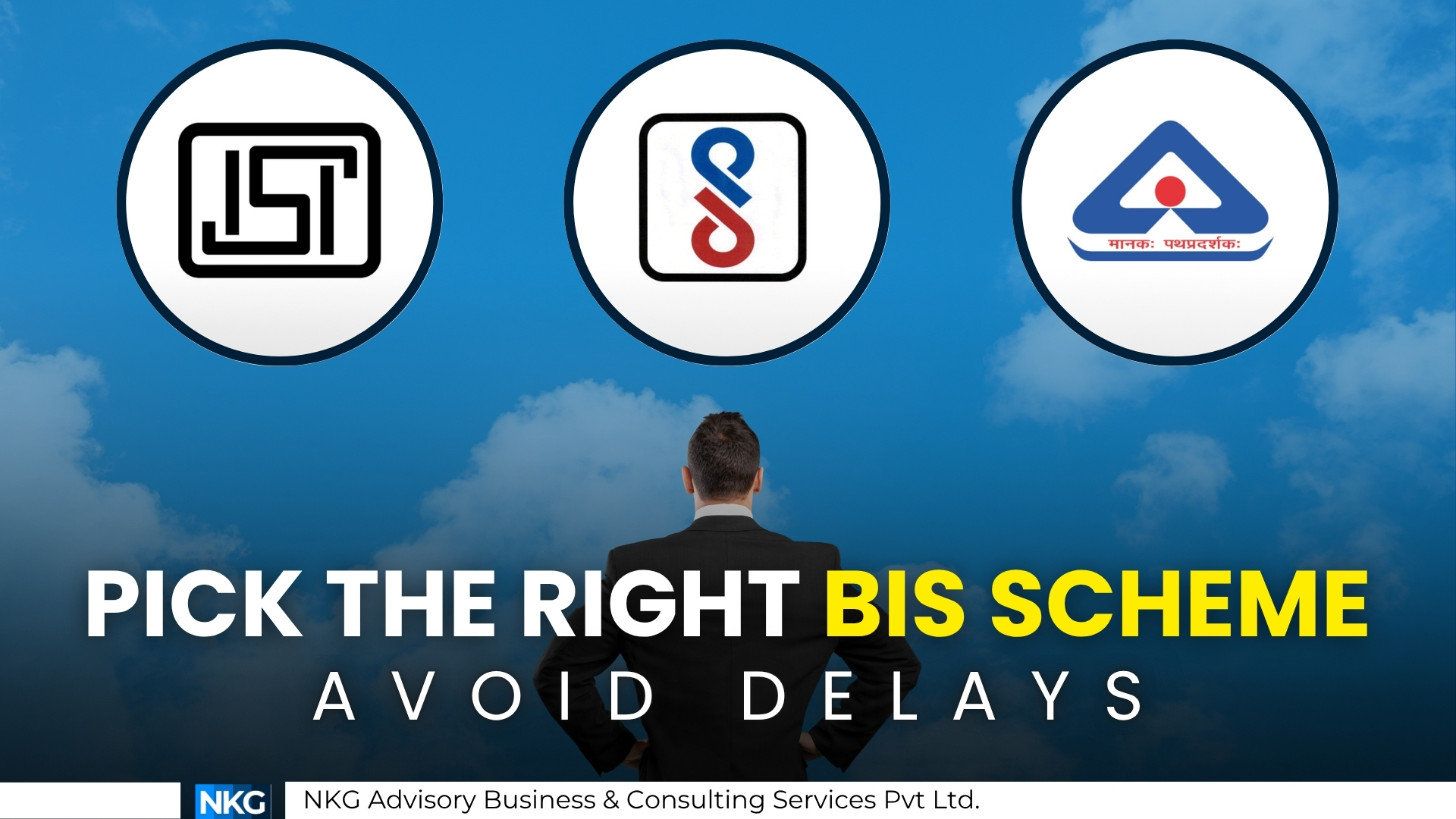
For manufacturers and importers eyeing the Indian market, understanding BIS certification schemes in India is not just about quality benchmarks; it’s a legal requirement. The Bureau of Indian Standards (BIS) governs product quality and safety through structured certification frameworks. Three major pathways stand out: BIS ISI mark Scheme I, BIS CRS registration Scheme II, and BIS Scheme X low voltage and machinery certification. This guide will help you decode these schemes, understand their scope, and navigate compliance effectively.
Why BIS Certification Matters
The Government of India enforces Quality Control Orders (QCOs) across product sectors. Under these, BIS certification becomes mandatory for manufacturers. Importantly, BIS certification schemes in India grant licenses only to manufacturers, not importers or traders. Importers must work with BIS-certified manufacturers or act as an Authorized Indian Representative (AIR) for foreign suppliers.
Non-compliance leads to customs holds, penalties, or product seizures. Therefore, identifying the correct scheme for your product is the first step toward smooth market entry.
ISI Mark Scheme I BIS: The Foundation of Indian Product Compliance
The ISI mark Scheme I BIS applies to over 689 product categories ranging from cement and steel to household appliances and PPEs. This scheme mandates:
- Factory inspection by BIS officials
- Product testing in BIS-recognized labs
- Marking with the ISI logo and license number (CM/L)
This scheme is essential for:
- Electrical cables and switches
- Domestic appliances
- Helmets and protective gear
- Building materials like cement, rods, and pipes
Applicable to both Indian and foreign manufacturers, the ISI mark signifies full regulatory approval and is often enforced at ports and retail levels.
CRS Registration Scheme II BIS: For Electronics, IT, and Solar Products
CRS registration Scheme II BIS is built for high-volume, low-risk product categories, especially in electronics. As of 2025, this scheme covers around 73 product categories, including:
- Laptops, tablets, and smartphones
- LED TVs and set-top boxes
- Inverters and UPS systems
- Solar PV modules and control units
Unlike Scheme I, CRS registration Scheme II BIS does not require a factory inspection. Instead, the process involves:
- Testing from BIS-approved labs
- Submission of a Self-Declaration of Conformity (SDoC)
- Product registration and use of the CRS mark
Foreign manufacturers must appoint an AIR and follow the BIS registration procedure before marketing in India.
BIS Scheme X Machinery Certification: Industrial Safety Takes Center Stage
BIS Scheme X machinery certification is the newest addition, enforced under the Omnibus Technical Regulation (OTR), 2024. It applies to high-risk, industrial-grade machinery and electrical equipment. Scheme X is divided into two key segments:
a) Low-Voltage Switchgear & Control Gear (29 Categories):
This covers contactors, circuit breakers, switches, disconnectors, and similar components used in power systems.
b) Machinery & Equipment (20 Categories):
Covers pumps, motors, gearboxes, transformers, overhead cranes, and hoists.
For both, the certification involves:
- Risk assessment and compliance documentation
- On-site evaluation and safety audits
- Certification either via BIS license or Certificate of Conformity (CoC)
BIS Scheme X machinery certification is mandatory starting September 2026. Manufacturers, domestic or international, must prepare technical files and ensure proper labeling.
How These Schemes Compare
| Scheme | Coverage | Categories | Inspection | Certification Mark |
|---|---|---|---|---|
| ISI mark Scheme I BIS | General & industrial products | 689 | Yes | ISI Mark |
| CRS registration Scheme II BIS | Electronics, IT, Solar Goods | 73 | No | CRS Standard Mark |
| BIS Scheme X machinery certification | Switchgear & Heavy Equipment | 49 (29+20) | Yes | Scheme X / CoC |
Choosing the right path ensures faster approvals and fewer regulatory bottlenecks.
Common Challenges in BIS Certification
- Applying under the wrong scheme (e.g., electronics under Scheme I instead of CRS registration Scheme II BIS)
- Using unrecognized or foreign lab reports
- Lack of an Indian Representative for overseas brands
Every scheme under the BIS certification schemes in India has unique documentation, timelines, and technical expectations. Getting this wrong can stall your go-to-market strategy.
Steps to Get Certified
- Identify the applicable Indian Standard (IS code)
- Confirm the applicable scheme (ISI, CRS, or Scheme X)
- Prepare documents and appoint AIR (if foreign manufacturer)
- Submit samples to a BIS-approved lab
- Undergo factory inspection (for Scheme I and X)
- Receive a license or registration
By following the proper path, manufacturers ensure their products bear the official BIS certification mark for legal and market access.
Final Thoughts
Whether it’s a smartphone, industrial transformer, or household fan, BIS certification schemes in India create the foundation for quality assurance and safety compliance.
Choosing the correct scheme ISI mark, Scheme I BIS, CRS registration, Scheme II BIS, or BIS Scheme X, machinery certification not only helps in fulfilling statutory requirements but also enhances your brand’s credibility in one of the world’s largest markets.
If you’re unsure which scheme applies to your product or need help navigating the licensing process, our experts at NKG Advisory are here to help.
Resources for Further Reading:
- Scheme I – ISI Scheme
- Scheme II – CRS Scheme
- Scheme X – Low Voltage Switchgears
- Scheme X – Machinery and Electrical Equipment
If you are looking for more insights on compliance, certifications, and industry updates? Explore our blog page for expert guidance and actionable information. Visit Now