Introduction
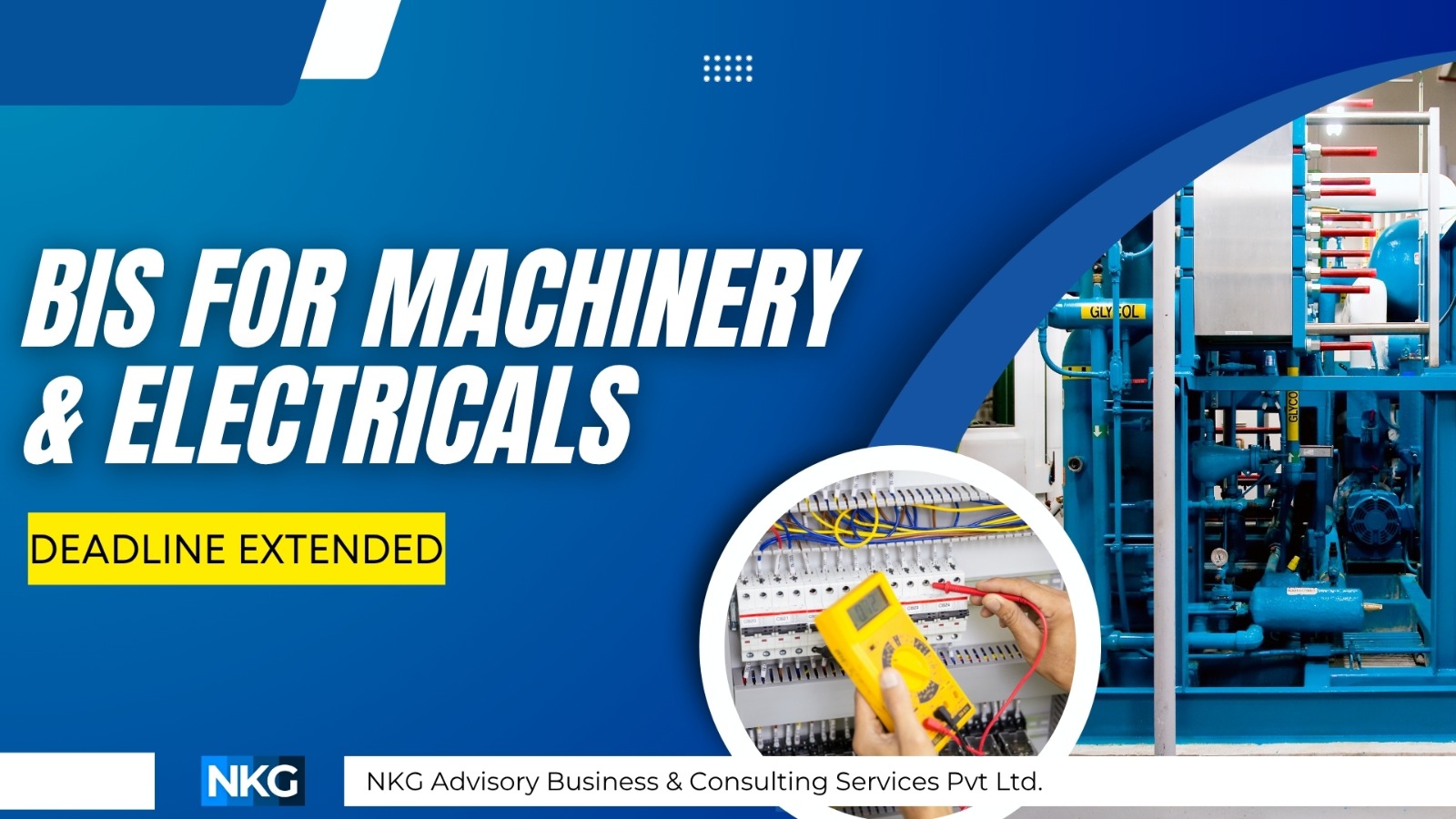
BIS for machinery and electrical equipment is now a key compliance mandate under India’s evolving regulatory landscape. Through the (Omnibus Technical Regulation) Amendment Order, 2025, the Ministry of Heavy Industries has extended the enforcement deadline originally set under the 2024 directive.
This update offers much-needed clarity to manufacturers, exporters, and regulatory teams preparing for Indian market access. For global businesses involved in machinery or electrical equipment, aligning early with BIS for machinery guidelines isn’t just smart, it’s essential for avoiding delays, rejections, or detentions at Indian ports.
What Changed Under the 2025 Amendment
The Indian government amended the original 2024 order via S.O. 2579(E) on 12 June 2025. The headline revision is:
- 1 September 2026 becomes the new compliance deadline for machinery and electrical equipment listed in the First Schedule.
The amendment also states that assemblies, sub-assemblies, and components in the same schedule will be enforced on dates to be notified later. This phased roll-out, widely called the machinery safety order in industry circles, gives every supply-chain node critical breathing space.
Who Needs to Act
If your business manufactures, exports, or distributes machinery or electrical equipment to India, this regulation applies to you. Whether you’re a foreign OEM, contract manufacturer, or component supplier, grasping the compliance scope under BIS for machinery is mission-critical.
Because enforcement will later cover assemblies and sub-assemblies, the machinery safety order ultimately touches entire product families, not just finished equipment.
Expected Certification Route
BIS has not yet confirmed the exact pathway, but most goods are expected to follow Scheme I (ISI mark licensing). Exporters often refer to this pathway as scheme x machinery approval because it typically involves:
- Product testing in BIS-recognised labs
- Compliance dossiers mapped to Indian Standards
- Factory inspection before (and sometimes after) licensing
Firms that hold older licenses should revisit conformity strategies now; legacy documents will not automatically satisfy the 2025 update.
Step-by-Step Preparation Checklist
- Gap Assessment (0-2 months) – Map every model against First Schedule codes; flag variants lacking Indian test data.
- Documentation Build-out (2-4 months) – Compile reports, schematics, and risk analyses with section numbers of applicable Indian Standards.
- Lab Engagement (4-6 months) – Reserve slots early; capacity tightens as the new safety order 2025 approaches enforcement.
- Factory Audit Readiness (6-7 months) – Train teams on traceability logs and calibration records before BIS officers visit.
- License Filing & Marking (7-9 months) – Submit the application, answer queries quickly, and order compliant labels once the grant letter arrives.
- Post-Licence Vigilance (ongoing) – Track amendments, archive samples, and run internal audits ahead of BIS surveillance.
Following this roadmap keeps projects on schedule and prevents last-minute bottlenecks.
Common Pitfalls to Avoid
- Assuming IEC equals ISI – International reports rarely meet Indian deviations; extra parameters are common.
- Late label design – Marking rules mandate BIS logo size and Indian Standard numbers; redesigns delay shipping when left too late.
How NKG Advisory Accelerates Compliance
NKG Advisory converts complex Indian regulations into clear, actionable projects. Our specialists:
- Map international certificates to Indian gaps
- Coordinate end-to-end testing for mechanical and BIS for electrical equipment product lines
- Provide in-house auditors to rehearse factory inspections
- Monitor gazette updates so you never miss a change
By integrating our regulatory intelligence platform with your product data, we reduce downtime and let your teams focus on engineering and sales.
Conclusion
The revised deadline of 1 September 2026 is a strategic window, an opportunity to outpace slower competitors still interpreting the details. Beyond simple compliance, meeting the deadline signals reliability to Indian OEM partners and government buyers who increasingly prioritize certified imports. Early action also reduces last-minute costs associated with expedited testing and freight rescheduling.
Engage NKG Advisory today to translate regulatory text into market success. Together, we’ll navigate every clause of the Amendment Order, deliver compliant products, and safeguard your exports from disruptions.
And if you are looking for more insights on compliance, certifications, and industry updates? Explore our blog page for expert guidance and actionable information. Visit Now