Introduction
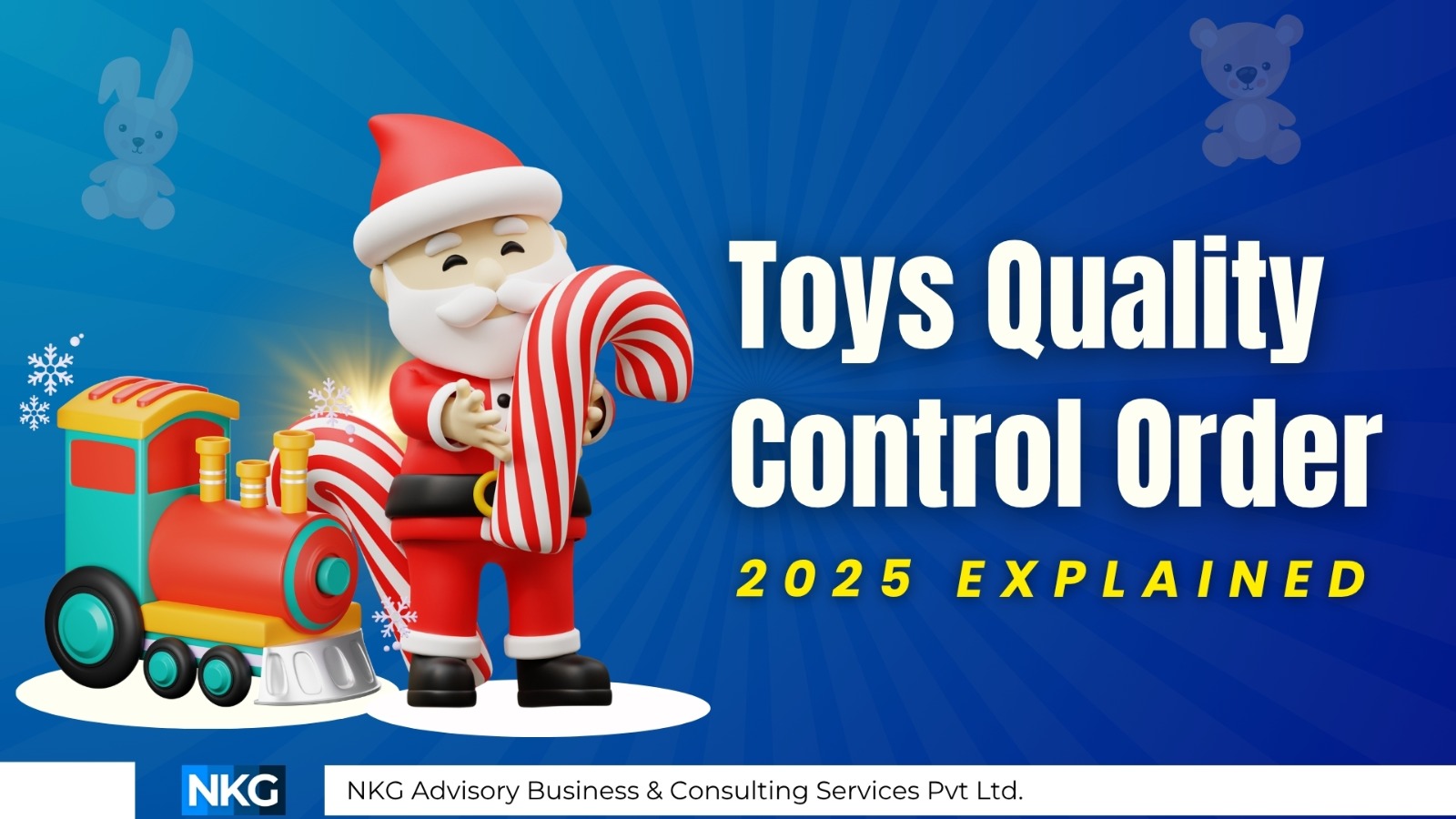
India’s toy industry is rapidly evolving, and 2025 marks a turning point for manufacturers, importers, and brand owners. The Toys Quality Control Order 2025 now mandates full compliance with BIS certification, ISI marking, and rigorous lab testing before any toy can be legally sold in India.
If you’re a toy brand — whether you make, import, or distribute — this blog will help you understand what’s required, what’s new, and how to stay compliant without delays or penalties.
Understanding the Toys Quality Control Order
The Toys Quality Control Order 2025 (QCO) enforces mandatory compliance with Indian safety standards for all toys meant for children under 14 years of age.
As per the BIS mandate, toys must conform to the following Indian Standards:
- IS 9873 Parts 1, 2, 3, 4, 7, 9
- IS 15644:2006 (for electric toys)
Only toys that are certified by the Bureau of Indian Standards (BIS) and bear the ISI mark can be legally manufactured, imported, or sold in India. Any toy lacking this certification is deemed non-compliant and may face import rejection, market withdrawal, or fines.
Who Must Comply with the QCO?
The Toys Quality Control Order 2025 applies to all toy manufacturers — whether based in India or operating from abroad.
- Indian manufacturers must ensure their products are BIS-certified and carry the ISI mark before they’re introduced into the domestic market.
- Foreign manufacturers looking to sell or export toys to India must also obtain BIS certification through an Authorized Indian Representative (AIR) and comply with all testing and labeling requirements.
Note: Export-only toys are exempt, but any product marketed or intended for use by children in India must fully comply with the QCO.
Whether you’re launching a toy startup or expanding your global toy brand into India, understanding this regulation is critical to avoid customs delays or market restrictions.
What Changed for 2025?
While the Toys Quality Control Order was first introduced in 2020, a significant amendment was issued in October 2024 — making 2025 a critical year for enforcement.
One of the most notable updates is a research and development (R&D) exemption for manufacturers.
Here’s what changed:
- Up to 300 toy samples per year (maximum 5 units per type) can now be imported without a BIS license, specifically for R&D purposes.
- These toys cannot be sold in the Indian market under any condition.
- All such units must be disposed of as scrap after their evaluation.
- Manufacturers availing of this exemption must maintain year-wise records and submit an annual declaration to the Department for Promotion of Industry and Internal Trade (DPIIT).
This provision provides much-needed flexibility for prototyping, innovation, and lab testing. However, any misuse or commercial distribution of these exempt units could invite regulatory scrutiny.
How to Get a Toys BIS License
The process to obtain a Toys BIS license involves several steps:
- Classify your toy based on type (electric or non-electric) and match it to one of the 146 sub-categories under BIS guidelines.
- Submit your application on the Manakonline portal.
- Group the toy based on design, material, and function (as per BIS’s grouping guidelines).
- Send sample(s) to BIS-recognized labs for safety testing under the relevant IS standards.
- After passing tests, you’ll undergo inspection and verification.
- On approval, you’ll receive a BIS license with permission to use the ISI mark.
For adding new toy models later, you only need to declare them — no fresh testing is required, provided they fall within the certified group.
Understanding the Toys ISI Mark
The ISI mark is a stamp of safety. For toys, it confirms that the product has:
- Passed required safety tests
- Been reviewed by BIS-authorized bodies
- Met manufacturing quality benchmarks
The Toys ISI mark must be:
- Printed or embossed on the toy and/or packaging
- Accompanied by the license number and BIS website link
- Visible and Permanent
No toy can be sold in India without this marking — even if it’s BIS-certified.
Documentation, Testing & Labelling Checklist
To ensure you’re 100% ready, here’s a compliance checklist:
- Valid BIS license for each toy category
- Grouping declaration and series info
- Complete lab test reports from BIS-approved labs
- Age grading and child safety warnings
- ISI mark placement and CM/L license number
- R&D scrap records (if availing exemption)
- Declaration forms (Appendix II, III, IV as applicable)
Common Compliance Mistakes to Avoid
- Declaring incorrect starting age to avoid tests
- Selling R&D-exempt samples commercially
- Submitting test samples to non-BIS-accredited labs
- Missing ISI mark on final retail packaging
- Not updating scope when adding new toy series
Each of these can result in license suspension, rejection at port, or legal action.
How NKG Advisory Can Help
At NKG Advisory, we specialize in regulatory solutions for toy manufacturers and importers entering the Indian market. Our team handles:
- Product classification and series mapping
- BIS application and documentation
- Testing coordination with BIS-recognized labs
- Packaging and labeling reviews
- R&D exemption tracking
- Post-licensing changes and renewals
Whether you’re a startup or an established global brand — we’ll help ensure your toy products are fully compliant and ready to sell.
Conclusion
The Toys Quality Control Order is now a gateway to the Indian toy market. For manufacturers, both domestic and international, meeting BIS certification requirements and ensuring proper ISI marking is no longer optional. It’s the foundation for legal market entry, smooth customs clearance, and brand credibility.
If you’re unsure about where to begin or how to stay compliant, working with a regulatory partner like NKG Advisory can simplify the process and keep your business market-ready in 2025 and beyond.
And if you are looking for more insights on compliance, certifications, and industry updates? Explore our blog page for expert guidance and actionable information. Visit Now