UAE cosmetic registration should be one of the first things an Indian beauty brand plans before shipping products to the Middle East.
The UAE looks like an exciting expansion opportunity: strong beauty demand, premium consumers, international retailers and major marketplaces such as Amazon and noon.
But getting products from an Indian factory to a UAE customer requires much more than booking a shipment.
Registration, importer structure, labels, warehousing and marketplace fulfilment all need to work together.
1. Start UAE Cosmetic Registration Before Shipping
Do not follow a “ship first, register later” strategy.
Brands should first understand the product-registration requirements that apply to their cosmetics, skincare, personal-care products or fragrances.
For Dubai, Montaji product registration is an important part of the consumer-product compliance process.
Dubai Municipality provides official information about consumer-product registration and related services through its Dubai Municipality services portal.
Planning UAE cosmetic registration early can prevent stock from arriving before the product is commercially ready.
2. Decide Who Will Import the Products
Before launch, decide how your UAE business structure will work.
Will you appoint a distributor?
Use a local importer?
Work through a UAE company?
The importer or local business arrangement can affect registration, customs clearance, warehousing and marketplace onboarding.
Indian brands should settle this structure before sending commercial inventory.
3. Review Labels Before Printing Thousands of Units
Packaging that works in India should not automatically be assumed to work in the UAE.
Review ingredient information, product identity, claims, manufacturer details and applicable UAE cosmetic labeling requirements before mass production.
Relabelling thousands of products after they reach Dubai is far more expensive than correcting artwork before printing.
For additional guidance, read NKG’s Cosmetic Product Registration in Dubai guide.
4. Connect UAE Cosmetic Registration With Import Readiness
Registration is only one part of market entry.
Before shipping, align:
- Product details
- Invoice information
- Importer information
- Manufacturing details
- Labels
- Country-of-origin documentation
- Required registration evidence
If the actual shipment does not match the regulatory documentation, customs delays can quickly increase storage and logistics costs.
A strong UAE cosmetic registration plan therefore connects compliance with the products actually being imported.
5. Choose the Right Warehousing Model
Once customs is cleared, where will the products go?
Brands can consider distributor warehouses, third-party logistics providers or marketplace fulfilment networks.
The warehouse should support stock visibility, batch tracking, returns and appropriate storage.
Do not choose warehousing only by price.
Choose a setup that can support growth.
6. Prepare Amazon and noon Before Stock Arrives
Marketplace onboarding should start while registration and logistics are still progressing.
Amazon UAE offers Fulfilment by Amazon, where eligible inventory can be stored in Amazon fulfilment centres and orders are handled through its fulfilment network. Brands can review the official Amazon UAE seller information.
noon also provides fulfilment options for sellers. Review its official seller platform while building the launch plan.
Prepare product images, listings, claims and compliance documentation before inventory arrives.
7. Build a Repeatable Middle East Launch
Your roadmap should look like this:
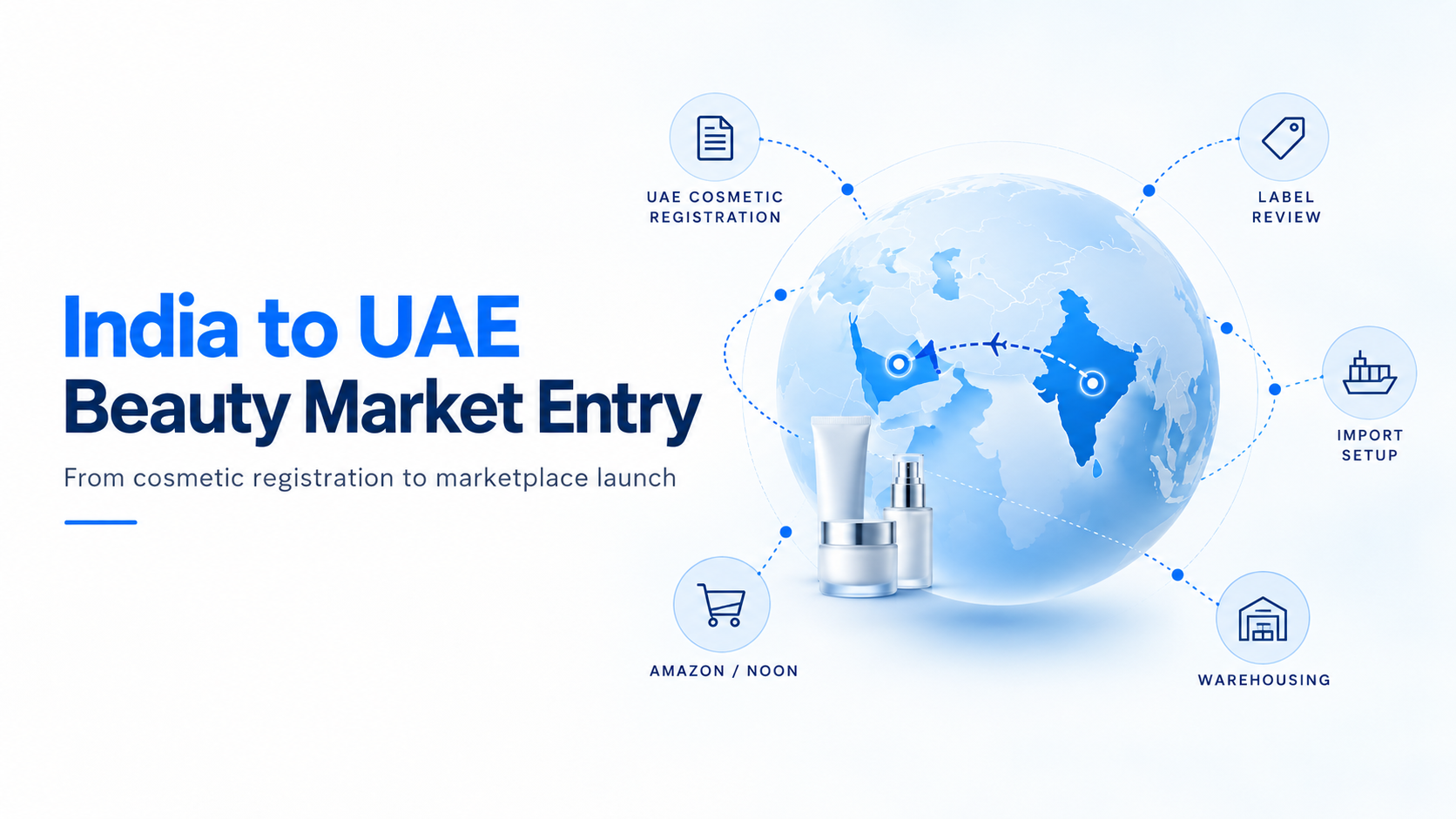
Market Strategy → UAE Cosmetic Registration → Importer Setup → Label Review → Import → Warehousing → Amazon/noon → Fulfilment → Ongoing Compliance
For Indian brands, UAE cosmetic registration is not simply an approval task.
It is the regulatory foundation of the complete UAE launch.
NKG supports beauty brands with cosmetic product registration in Dubai, regulatory planning and international market access.
The goal is not simply to send products from India to the UAE. It is to build a market-entry system that can support long-term Middle East growth.