Introduction
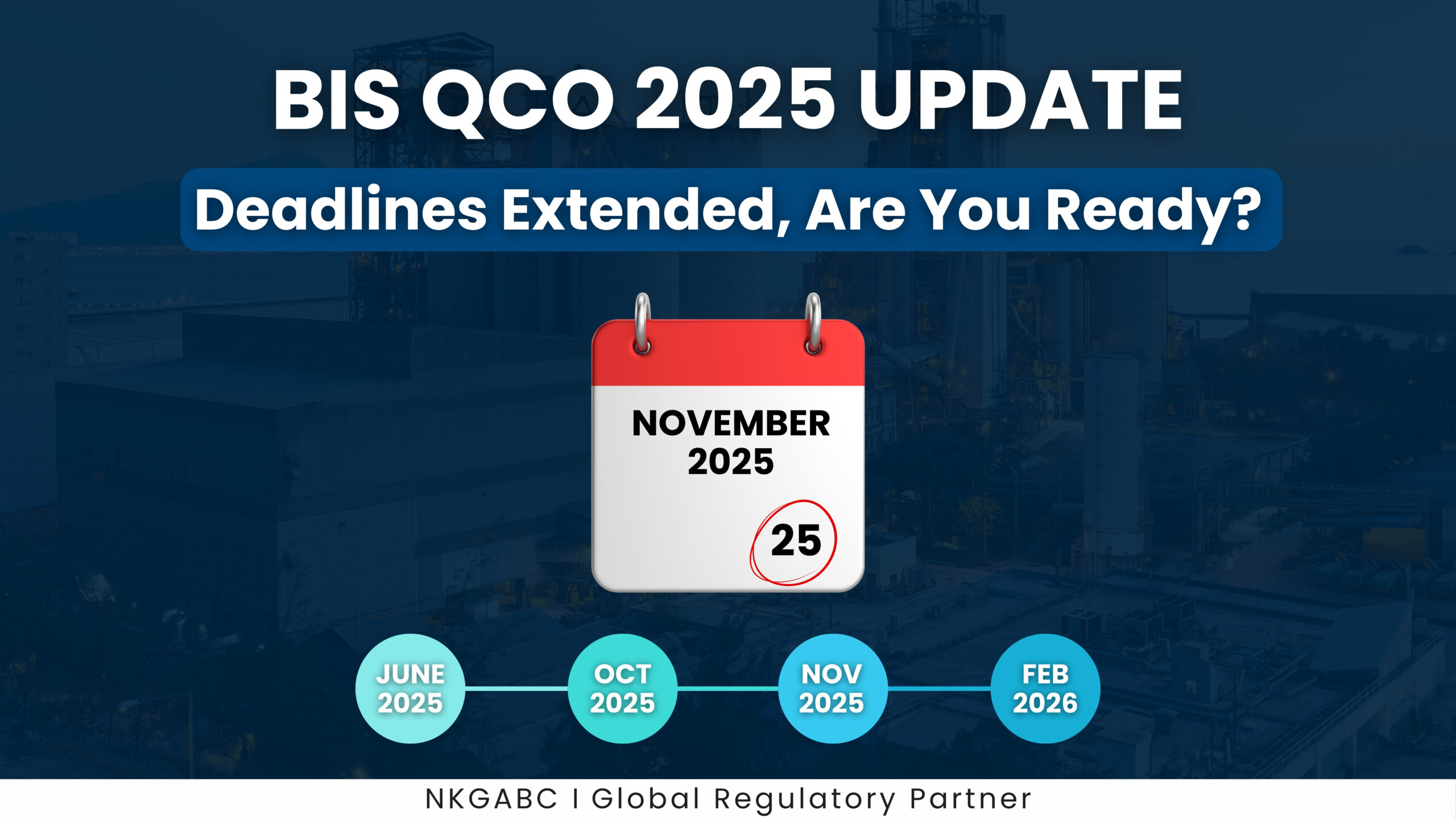
The BIS QCO 2025 update has reset enforcement timelines across multiple industries in India. For some, the extension to November 2025 for electrical products comes as a relief; for others, it still feels like a race against time to complete testing, audits, and documentation.
These changes are not just about new dates on paper. They reflect how compliance in India continues to evolve, providing businesses with more room to prepare, while also setting a firm direction toward 2026 enforcement. Understanding what has changed and how to use this window wisely will be the difference between a smooth certification journey and last-minute disruptions.
Background: Why QCOs Matter
A BIS quality control order (QCO) is a mandatory directive under the Bureau of Indian Standards Act. Once notified, it makes it compulsory for products in that category to obtain BIS certification in India before being imported, manufactured, or sold.
The purpose is clear:
- Protect consumers from unsafe or low-quality goods.
- Raise the reliability of products available in the Indian market.
- Support domestic producers by ensuring imports meet the same standards.
The challenge, however, is that every QCO requires businesses to navigate the BIS certification process, which can be demanding. For manufacturers and importers, this means aligning designs, testing products, preparing dossiers, and often undergoing factory audits.
The BIS QCO 2025 update is significant because it extends certain deadlines, introduces Scheme-X as a new pathway, and fixes long-term timelines for 2026 enforcement.
The 2025 Amendments
Two notifications in May and June 2025 shaped the current update:
1. Electrical Equipment Extension – 5 May 2025
- Enforcement for products under serial numbers 1.2(a), 1.3(a), 2.1(a), 3.1(a), 4, 5, 6.1(a), 7, 8.1 has been moved from 10 May 2025 to 10 November 2025.
- The order was issued by the Ministry of Heavy Industries.
- This offers businesses a little more space to complete testing and manage certification filings.
2. Machinery & Electrical Equipment Safety Amendment – 12 June 2025
- Machines and electrical equipment listed in the First Schedule of the Omnibus Technical Regulation must now comply by 1 September 2026.
- Assemblies, sub-assemblies, and components will be notified separately.
- This provides clarity for long-term planning and sets a firm date for 2026 enforcement.
3. Certification Pathways
- Scheme-I (ISI Mark Scheme) – Product certification through a license, covering industrial and consumer goods.
- Scheme-II (CRS Scheme) – For electronics and IT products. Registration is compulsory after BIS-recognized lab testing, but unlike Scheme-I, no factory audit is required.
- Scheme-X – Introduced for switchgear and machinery under the Omnibus Regulation, providing greater flexibility in cases where ISI licensing may not apply.
QCO Enforcement Timeline at a Glance
| Month | Key Categories | Sample Products |
|---|---|---|
| May 2025 | Electrical | IS/IEC 60947 switchgear, motor starters |
| June 2025 | Packaging, Textiles | HDPE sacks, PP laminates |
| July 2025 | Metals, Hinges | Steel hinges, stainless butt hinges |
| August 2025 | Chemicals, Machinery | Acetic acid, looms, compressors |
| October 2025 | Electronics, Aluminium | TVs, wires, foils |
| Feb 2026 | Furniture | Desks, chairs, bunks |
Note: These categories are examples. The full scope of the BIS quality control order includes additional items listed in official Gazette notifications.
Where Businesses May Struggle
The update does not remove the effort required; it only shifts the timeline. Businesses may still face:
- Uncertainty in product mapping – figuring out whether a model falls under a specific IS standard can be complex.
- Testing delays – BIS-recognized labs may see higher demand as deadlines approach.
- Factory audit challenges – gaps in documentation or processes often surface during audits.
- Customs and e-commerce pressure – consignments without approvals risk seizures, and uncertified products face delisting online.
These are common points of friction we’ve seen businesses encounter, even when deadlines seem manageable on paper.
Where Businesses Can Benefit
The 2025 amendments also create opportunities if used thoughtfully:
- Additional time – November 2025 and September 2026 deadlines give companies a chance to prepare systematically.
- Phased approach – certifications can be staggered instead of rushed all at once.
- Certainty for planning – the fixed 2026 enforcement date allows supply chains to prepare in advance.
- Certification flexibility – Scheme-X offers another route for approvals, which may be useful in certain product categories.
Seen this way, the update is not just an obstacle; it’s also a planning advantage for those who act early.
Turning Preparation Into Strategy: The Compliance Roadmap
The BIS certification process can feel heavy, but broken into steps, it becomes more practical:
- Product Mapping
- Check if your product is covered under the BIS QCO 2025 update.
- Identify the applicable scheme – Scheme-I (ISI License: industrial/consumer goods, audit-based), Scheme-II (CRS: electronics/IT, lab-test only, no audit), or Scheme-X (Omnibus: switchgear/machinery, flexible, audit-based).
- Gap Analysis & Testing
- Review designs against Indian Standards.
- Secure testing slots at BIS-recognized labs ahead of deadlines.
- Documentation & Dossier Preparation
- Prepare test reports, declarations, and technical files.
- Incomplete dossiers are a frequent cause of delay.
- Application & AIR Appointment
- Overseas brands must appoint an Authorized Indian Representative (AIR).
- Early filing gives you an advantage as enforcement nears.
- Factory Audits & Lab Setup
- Many approvals require audits. From experience, this is where companies often face the most surprises. Using the extra time to run internal mock checks can make the official audit smoother.
- This is also the stage where many businesses struggle. Having guided multiple companies through audits, NKG Advisory can help identify gaps early and set up systems that align with BIS expectations, saving time and rework.
- Post-License Surveillance
- Once licensed, ongoing checks will continue. Building a monitoring plan now avoids issues later.
This roadmap is not just about compliance; it’s about reducing surprises. Businesses that pace themselves tend to find the process far less disruptive than those who wait until the last quarter.
Sources Mentioned
- Ministry of Heavy Industries Notifications (5 May 2025 and 12 June 2025).
- Bureau of Indian Standards guidelines on Scheme-I and Scheme-X.
- BIS CRS Scheme-II: List of products covered under CRS Scheme
Conclusion
The BIS QCO 2025 update offers the industry both a pause and a signal. The pause gives breathing room for businesses to complete testing, audits, and filings without rushing. The signal is that by 2026, enforcement and certification will no longer be optional for key categories.
Each company will read this moment differently, some as an opportunity to get ahead, others as a challenge still weighing on operations. What matters most is how the time is used. Preparing calmly now often proves far less costly than firefighting later.
And no matter whether your products fall under Scheme-I, Scheme-II, or Scheme-X, the direction is the same: certification is becoming compulsory, and starting early reduces risks.
At NKG Advisory, we’ve supported companies across electricals, electronics, chemicals, and consumer goods in navigating the BIS certification process. From product mapping and lab coordination to dossier preparation and factory audit readiness, our role is to make compliance less overwhelming and more predictable.
To stay updated with more insights on compliance, certifications, and industry trends, explore our blog page or connect with us on LinkedIn for regular updates.