Introduction
When a Quality Control Order keeps evolving through amendments, the compliance question is not what changed, but what applies today.
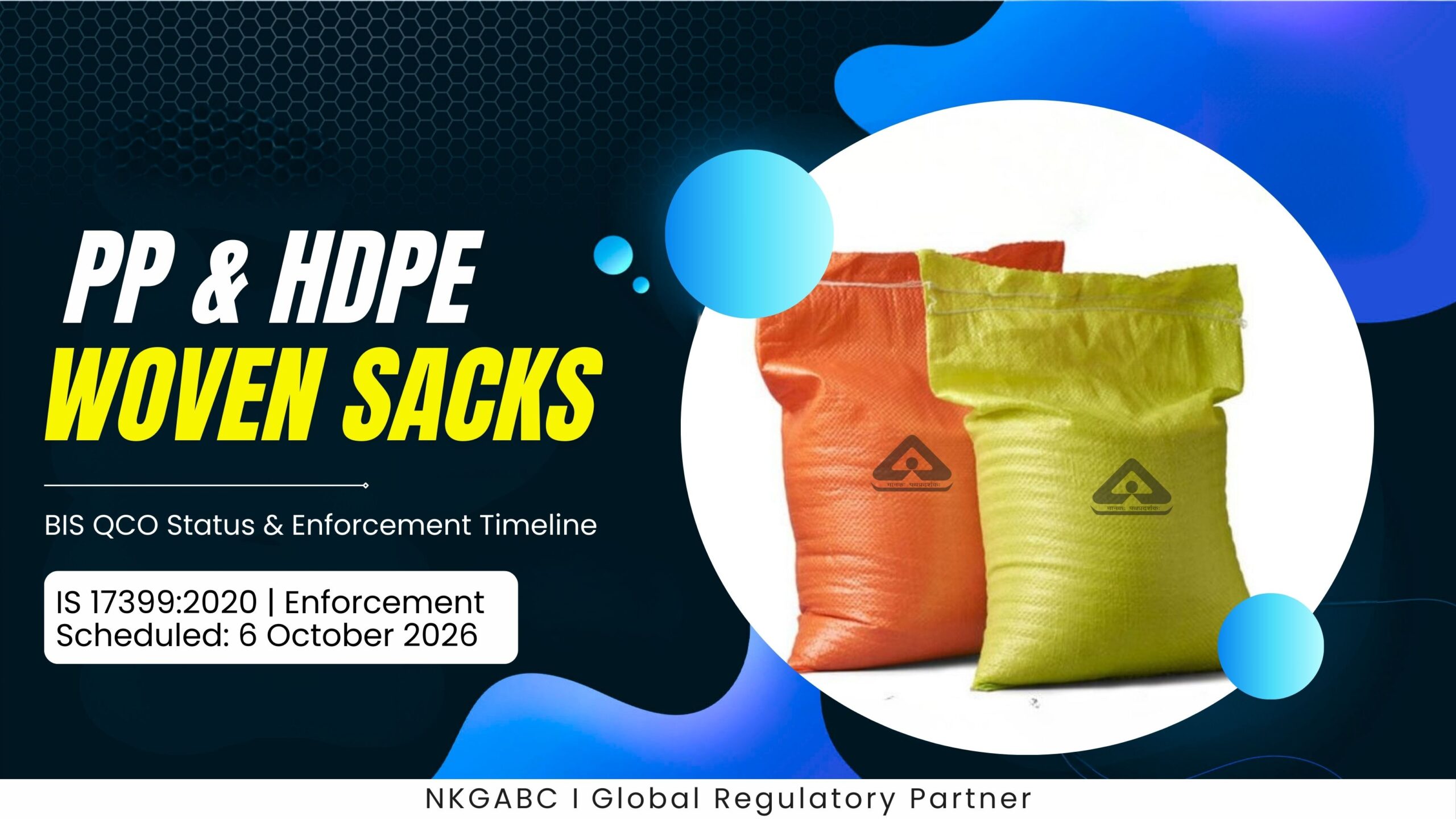
Recent regulatory notifications have led manufacturers, importers, and compliance teams to re-examine how polypropylene (PP) and high-density polyethylene (HDPE) laminated woven sacks are regulated in India. These products are technically governed by IS 17399:2020, which specifies requirements for laminated woven sacks used for mail sorting, storage, transport, and distribution. In this context, understanding the PP HDPE laminated woven sacks BIS QCO status is essential to avoid incorrect assumptions around applicability, enforcement, and preparedness.
Why These Woven Sacks Attract Regulatory Attention
PP and HDPE laminated woven sacks are designed for repetitive handling, stacking, and transport in organised distribution systems. Their use in mail sorting and logistics environments places emphasis on consistency, load performance, and handling durability. Where such products interface with public infrastructure and large-scale distribution, quality uniformity becomes a regulatory consideration rather than a purely commercial one.
This is why the regulatory framework links these sacks to a specific Indian Standard instead of treating them as general packaging material.
Indian Standard Reference: IS 17399:2020
IS 17399:2020 sets out technical and performance requirements for PP and HDPE laminated woven sacks intended for mail sorting, storage, transport, and distribution. The standard addresses construction parameters, material composition, and performance characteristics relevant to logistics use.
The presence of an Indian Standard establishes a technical benchmark. Mandatory conformity, however, flows only through the Quality Control Order mechanism.
Understanding the Quality Control Order Framework
Under India’s BIS framework, a Quality Control Order determines when compliance with an Indian Standard becomes mandatory. For PP/HDPE laminated woven sacks, the QCO was initially issued in 2023 and has since been subject to multiple amendment orders.
These amendments adjust procedural aspects of the Order, particularly related to enforcement timing, while retaining the defined product scope and standard reference.
QCO Amendment Timeline – Procedural Reference
| Notification Year | Notification Description | Reference |
|---|---|---|
| 2023 | Textiles, Polypropylene (PP)/High Density Polyethylene (HDPE) Laminated Woven Sacks for Mail Sorting, Storage, Transport, and Distribution (Quality Control) Order, 2023 | Initial QCO issued |
| 2024 | Amendment Order issued | First amendment |
| 2024 | Amendment Order issued | Second amendment |
| 2024 | Amendment Order issued | Subsequent amendment |
| 2025 | Amendment Order issued | Further amendment |
| 2025 | Amendment Order issued | Additional amendment |
| 2026 | Amendment Order issued | Latest amendment |
| — | Current notified position | QCO scheduled to come into force on 6 October 2026 |
Current Draft / Latest Notification
Regulatory note:This table is provided solely as a chronological reference. It does not interpret the substance, intent, or impact of individual notifications.
What the Current Status Means in Practice
The current regulatory position requires careful reading. The QCO exists, the product definition is fixed, and the Indian Standard remains valid. At the same time, mandatory enforcement is scheduled for a future date.
This distinction is central to pp hdpe laminated woven sacks qco applicability India. Applicability under the framework is defined, while enforceability is time-bound and currently deferred.
Does This Remove BIS Relevance?
No. BIS relevance continues even during a deferred enforcement phase. Market participants may still reference the 17399:2020 BIS certification requirements in contracts, tenders, or internal quality systems. This often leads to confusion between regulatory obligation and commercial expectation.
Understanding this separation helps businesses avoid both under-preparation and unnecessary compliance action.
Import and Trade Considerations
From a trade perspective, pp hdpe laminated woven sacks import compliance India remains relevant. While mandatory BIS certification may not be required for import under the deferred QCO, importers and suppliers are often asked to demonstrate technical conformity through specifications, test reports, or quality declarations.
Maintaining alignment with the applicable Indian Standard during this phase reduces operational friction and future transition risk.
Applicability Versus Enforcement
A common misconception is treating repeated amendments as an exemption. The current framework does not remove these sacks from future conformity assessment. It postpones enforcement while keeping the regulatory pathway intact.
This is where pp hdpe laminated woven sacks regulatory interpretation India becomes important. Interpretation should focus on scope, trajectory, and preparedness rather than isolated notification dates.
How Industry Should Respond
Manufacturers, importers, and suppliers should:
- Avoid assuming permanent exemption based on repeated amendments
- Maintain technical alignment with IS 17399:2020
- Track notified enforcement dates without reacting to each amendment in isolation
- Prepare documentation and quality systems ahead of the stated enforcement timeline
This approach balances regulatory readiness with operational realism.
Closing Insight from NKG Advisory
At NKG Advisory, we advise clients to treat QCO amendments as part of a regulatory lifecycle rather than as endpoints. For PP and HDPE laminated woven sacks, disciplined interpretation, continued standards alignment, and forward preparation allow businesses to remain stable today while staying ready for mandatory enforcement tomorrow. Understanding the PP HDPE laminated woven sacks BIS QCO status in its correct legal and operational context supports informed decision-making without unnecessary risk.
In compliance, staying informed is the first step to staying prepared. For BIS registration or factory audit support, reach us at www.nkgabc.com or email navraj@nkgabc.com.
To stay updated with more insights on compliance, certifications, and industry trends, explore our blog page or connect with us on LinkedIn for regular updates.