Introduction
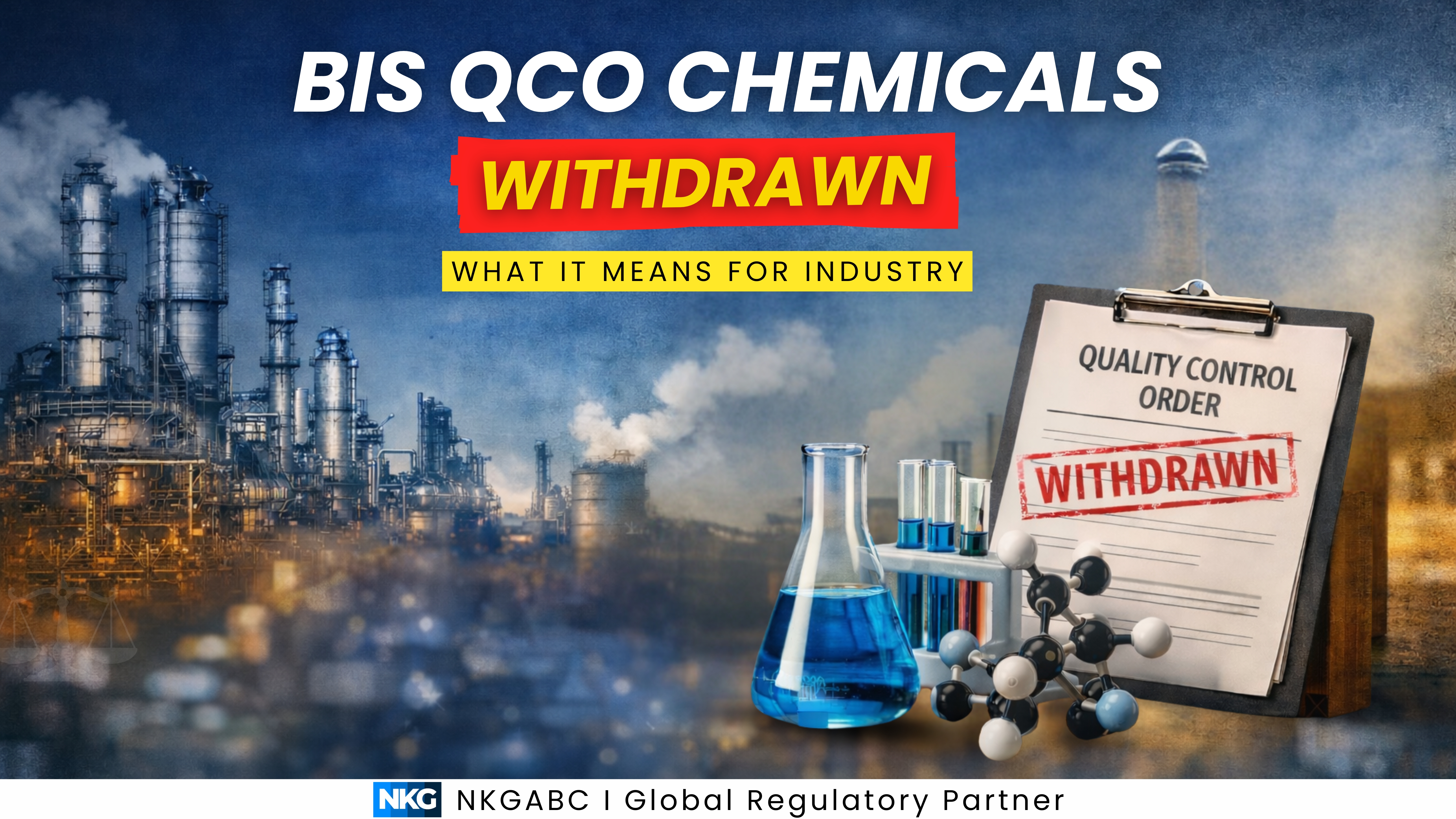
BIS QCO chemicals withdrawn is a phrase that has recently drawn attention across India’s chemical manufacturing and importing ecosystem. The regulatory status of certain chemicals under India’s Quality Control Order framework has been revised, with the applicable QCOs withdrawn and the notifications through which they were issued rescinded. For many manufacturers and importers, this has led to a straightforward assumption that compliance requirements have ended. However, this interpretation can be misleading.
When BIS QCO chemicals are withdrawn, it reflects a phase of regulatory reassessment rather than an absence of quality oversight. Understanding what this change actually means is important for businesses dealing with basic chemicals and petrochemical inputs. This blog explains how chemical QCO withdrawal India should be read, what continues to matter from a compliance standpoint, and how industry should approach this transition responsibly.
Important Regulatory Context
For all products discussed in this blog, the Quality Control Order has been withdrawn, and for the said purpose, the issuing notification has been rescinded.
This wording is deliberate. Each BIS QCO rescinded notification formally withdraws the enforceability of the order. It does not imply that the product is unregulated, exempt from standards, or permanently outside India’s quality framework.
Why Chemicals Come Under QCO Review
Chemicals are not finished consumer goods. They are base inputs used across multiple sectors such as pharmaceuticals, plastics, dyes, textiles, and industrial manufacturing. Because of their wide downstream use, regulators periodically assess how quality controls should be applied to them. QCOs are one tool in that system, but not the only one.
When implementation challenges, overlap with other controls, or sector-level feedback arise, regulatory frameworks are often reviewed and refined.
Category – Basic Chemicals
Products Covered
| Product | Regulatory Status |
|---|---|
| Acetic Acid | QCO withdrawn; issuing notification rescinded |
| Aniline | QCO withdrawn; issuing notification rescinded |
| Methanol | QCO withdrawn; issuing notification rescinded |
Correct wording for records and disclosures:
“The Quality Control Order has been withdrawn, and for the said purpose, the notification through which it was issued has been rescinded.”
What QCO Withdrawal Really Indicates
The withdrawal of these QCOs should be seen as a regulatory recalibration. From a compliance perspective, BIS QCO chemicals withdrawn reflects a reassessment of how quality controls are structured, timed, or enforced, not a conclusion that quality oversight is unnecessary.
For industry, this means the regulatory approach may change form, but expectations around product integrity, documentation, and traceability continue to matter.
Does QCO Withdrawal Remove BIS Relevance?
This is a key area of confusion.
Even where a QCO is withdrawn:
- Indian Standards continue to exist
- Other laws related to safety, environment, and trade still apply
- Product quality remains subject to scrutiny
Interpreting BIS QCO chemicals withdrawn as the end of regulatory responsibility is one of the most common misreads. BIS compliance for chemicals, therefore, needs to be viewed in a broader regulatory context, rather than as a single QCO-driven obligation.
Impact on Chemical Imports
From an importer’s perspective, the immediate procedural burden may be reduced. However, the impact of QCO withdrawal on chemical imports should not be misunderstood.
Importers should still ensure:
- Correct product classification
- Consistent specifications across consignments
- Readiness for revised or future notifications
In practice, when BIS QCO chemicals are withdrawn, this phase is best treated as an adjustment period, not a compliance exit.
How Industry Should Respond During This Phase
Rather than disengaging, this is the right time to:
- Review internal specifications against applicable standards
- Strengthen quality documentation
- Track regulatory signals and policy updates
Companies that maintain discipline when BIS QCO chemicals are withdrawn and become the operating context are typically better prepared when frameworks evolve again.
Official Notifications & Reference PDFs
(For Record and Verification)
The regulatory status described above is based on official notifications relating to:
- QCO withdrawal notification – Acetic Acid
- QCO withdrawal notification – Aniline
- QCO withdrawal notification – Methanol
Closing Insight from NKG Advisory
Regulatory systems evolve through structured review, not abrupt reversals. BIS QCO chemicals withdrawn represent a transition phase within India’s quality framework. For businesses, the objective should be clarity, not complacency. Treating this phase with regulatory maturity ensures continuity, credibility, and readiness for what comes next.
At NKG Advisory, we help companies interpret such updates clearly and practically, from understanding Gazette notifications to maintaining voluntary BIS certifications. Our approach ensures your quality systems stay audit-ready and adaptable, even as policies evolve.
In compliance, staying informed is the first step to staying prepared. For BIS registration or factory audit support, reach us at www.nkgabc.com or email navraj@nkgabc.com.
To stay updated with more insights on compliance, certifications, and industry trends, explore our blog page or connect with us on LinkedIn for regular updates.