Introduction
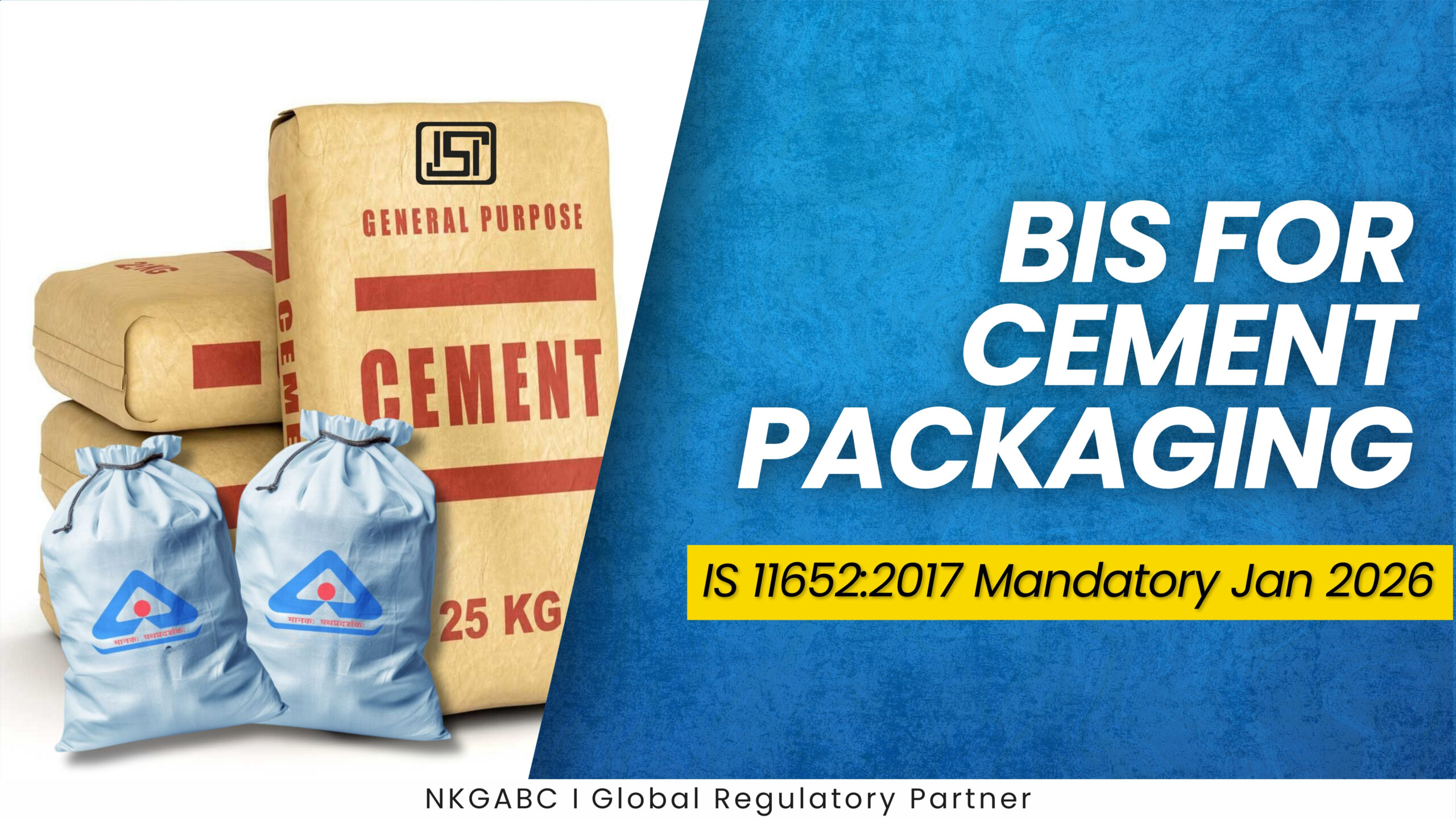
When you think of cement, the first image that comes to mind is usually construction, infrastructure, or heavy industry. Rarely do we think about the humble sack that carries cement from the factory to the building site. Yet, packaging is just as critical as production. A weak or non-compliant sack can mean wasted material, safety hazards, and financial losses. This is why the government has stepped in to make BIS for cement packaging mandatory under IS 11652:2017.
For cement manufacturers, packaging suppliers, and importers, this change isn’t just another compliance tick-box. It’s a turning point that ensures quality, safety, and competitiveness in a global marketplace. Let’s explore why this matters, what the standard covers, and how your business can get ready before the enforcement deadline in January 2026.
Why Cement Packaging is Under BIS Radar
The cement industry operates on high volumes and thin margins. Even a small percentage of material loss due to faulty sacks adds up to significant costs. Over time, reports of leakage, sack breakage during transport, and poor resistance to moisture pushed regulators to act.
By mandating BIS for cement packaging, the government aims to:
- Create uniform quality benchmarks for all players.
- Protect workers and consumers from risks of spillages and accidents.
- Improve efficiency in logistics and supply chains.
- Align India with global standards, making its cement exports more credible.
What may look like a packaging issue is in fact a matter of national productivity, trade reputation, and safety.
Understanding IS 11652:2017
IS 11652:2017 is the Indian Standard for Textiles, High-Density Polyethylene (HDPE)/Polypropylene (PP) woven sacks used to package 50 kg of cement.
These aren’t ordinary sacks. They are engineered for:
- Strength: able to withstand rough handling.
- Moisture resistance: to protect cement from hardening during storage.
- Durability: ensuring the sack lasts through loading, transport, and unloading.
When a sack meets the polypropylene cement sacks standard, it provides confidence to manufacturers, distributors, and even the end-users who handle the cement daily.
Scope of the Quality Control Order
Under the QCO, no cement sack covered by IS 11652:2017 can be manufactured, imported, sold, or distributed in India without carrying the ISI mark.
This means:
- Cement manufacturers must either produce or procure only BIS-certified sacks.
- Packaging manufacturers must undergo HDPE woven sacks certification before supplying.
- Importers cannot bring in non-certified sacks.
In short, everyone in the supply chain must take responsibility for compliance.
How to Obtain BIS Certification
Securing the cement packaging BIS requirement involves multiple steps, and businesses should prepare early:
- Application submission: File an application with BIS under IS 11652:2017.
- Sample testing: Accredited labs test sacks for tensile strength, drop resistance, moisture retention, and other criteria.
- Factory inspection: BIS officers conduct site audits to verify quality systems.
- License grant: Once approved, manufacturers can affix the ISI mark.
- Surveillance audits: BIS periodically checks to ensure ongoing compliance.
The process may seem straightforward on paper, but delays can occur if documentation, testing, or factory conditions fall short. That’s why companies should not wait until late 2025.
Risks of Non-Compliance
Ignoring BIS for cement packaging is not an option. Penalties for non-compliance include:
- Heavy fines and possible product seizure.
- Disruption of supply chains due to non-approval.
- Loss of customer trust and contracts.
For cement, where volumes are massive and timelines are strict, even a week’s delay due to packaging issues could derail major infrastructure projects. Compliance is no longer about avoiding penalties; it’s about securing business continuity.
Industry Insights: Why This Change Matters
This isn’t the first time BIS has stepped into packaging. We’ve already seen standards in toys, electronics, and chemicals. Cement packaging is the next logical step because:
- Cement is essential: Any disruption impacts housing, infrastructure, and public projects.
- Packaging failure is preventable: Stronger sacks mean reduced wastage.
- International buyers look at standards: BIS marks add credibility for exports.
When looked at strategically, HDPE woven sacks certification is more than compliance. It is an opportunity to modernize operations, improve product quality, and strengthen trust with stakeholders.
Strategic Guidance for Businesses
If you are part of this ecosystem, here’s what you should be doing now:
- Begin certification early: Don’t wait until Q4 of 2025. BIS approvals take time.
- Audit your suppliers: Verify that every sack you procure complies with the polypropylene cement sacks standard.
- Invest in quality systems: Upgrade testing labs, production lines, and documentation.
- Train your team: Make compliance part of daily operations, not a one-time task.
- Work with advisors: Partnering with regulatory consultants ensures smoother applications and fewer rejections.
By taking these proactive steps, you turn compliance into a competitive advantage.
Final Word
The introduction of BIS for cement packaging under IS 11652:2017 is not just a regulatory update; it is a milestone for India’s cement industry. It sets the stage for safer, stronger, and more reliable packaging that benefits every stakeholder from manufacturer to mason.
Companies that act now will not only meet the cement packaging BIS requirement but will also establish themselves as trusted players in a tightly regulated market.
At NKG Advisory, we specialize in helping cement manufacturers and packaging suppliers navigate the BIS landscape, from application filing and factory audits to ongoing surveillance.
Contact us today to secure your certification well before the January 2026 deadline.
And for more insights on compliance, certifications, and industry updates, explore our blog page or connect with us on LinkedIn for regular updates.