Introduction
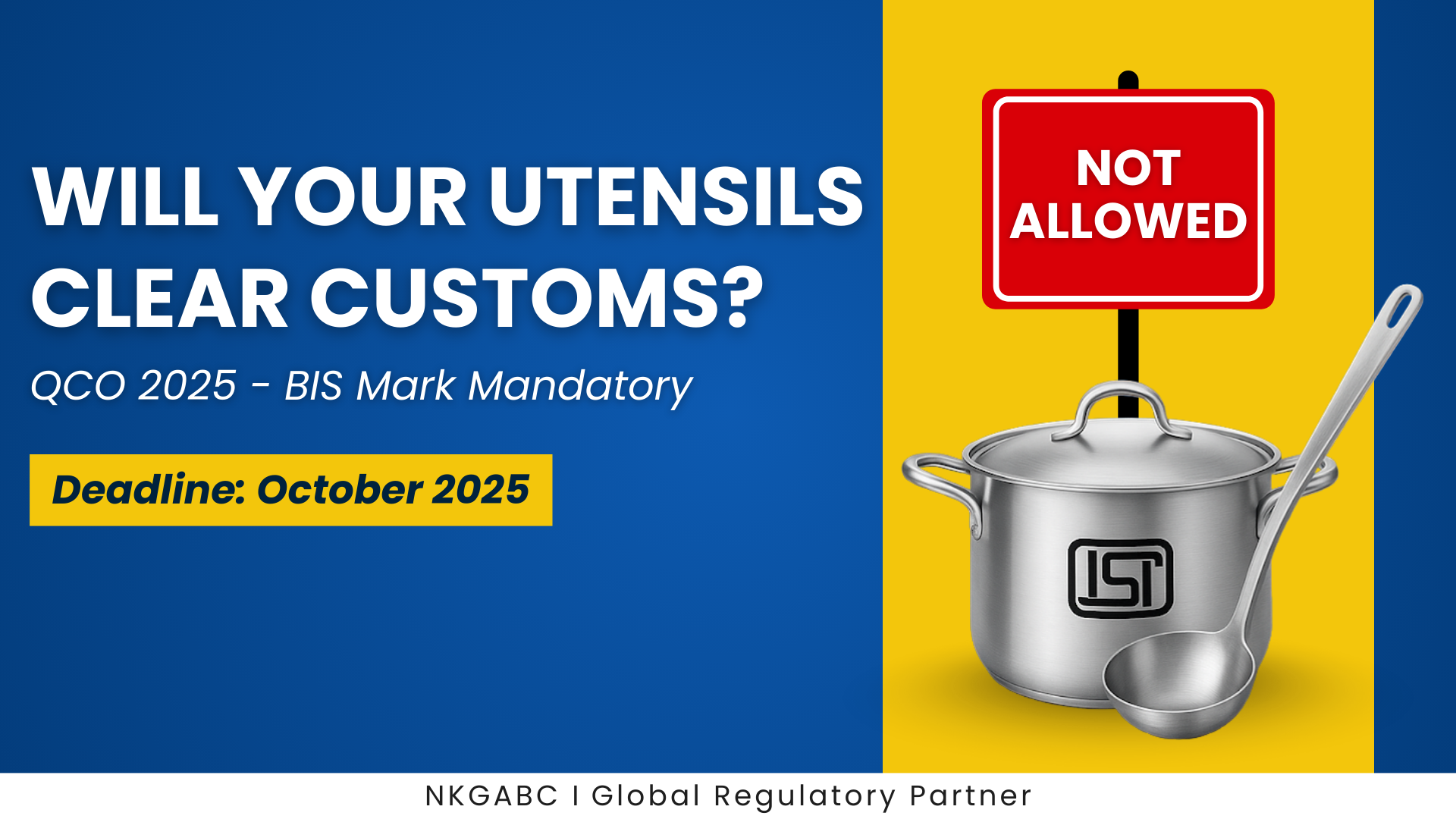
Imagine your stainless steel utensil consignment is at the port, but customs won’t release it because it doesn’t carry the BIS mark. From October 2025, BIS certification for stainless steel utensils will become mandatory. This is a real risk for cookware and utensil manufacturers, importers, and traders.
The Government of India, through the Cookware, Utensils and Cans for Foods and Beverages (Quality Control) Order, 2025, has made BIS certification for stainless steel utensils mandatory. Businesses that fail to comply face penalties, shipment delays, and reputational damage.
What is BIS Certification for Stainless Steel Utensils (IS 14756:2024)?
BIS certification is a license issued by the Bureau of Indian Standards (BIS) that allows manufacturers to use the ISI mark on their products. For stainless steel utensils, this ensures the products meet the requirements of IS 14756:2024, covering aspects like material quality, safety, and suitability for food contact.
In simple terms, without the ISI mark, stainless steel cookware cannot be legally manufactured, sold, or imported in India after the QCO deadlines.
Why Mandatory Now (QCO 2025)?
The notification published in the Gazette of India on August 21, 2025, officially brought stainless steel utensils under mandatory BIS certification. It came into force the same day, but the implementation deadlines begin from 1 October 2025 (general), 1 January 2026 (small), and 1 April 2026 (micro).
This step aims to:
- Protect consumers from substandard cookware that may leach harmful metals.
- Ensure uniform quality in the domestic market.
- Create a level playing field for both Indian and foreign manufacturers.
The same QCO also covers other cookware products, including wrought aluminium utensils (IS 1660:2024), stainless steel sinks (IS 13983:1994), three-piece round open top metal cans (IS 18427:2024), and aluminium cans for beverages (IS 14407:2023). For this blog, we focus on stainless steel utensils.
Who Needs BIS Certification?
The order applies to:
- Indian Manufacturers (Domestic Market): Must obtain BIS certification before selling stainless steel utensils in India.
- Importers: Cannot import utensils unless they carry a valid BIS license.
- Foreign Manufacturers: Must apply for BIS registration if exporting to India.
Exemptions (as per Gazette):
- Domestic exporters: If utensils are manufactured only for export, BIS certification is not required.
- Pre-filled Imports: Goods already filled with food/liquid/gas at the time of import are exempt.
- R&D Imports: Up to 200 units per year can be imported for R&D purposes, provided they are not sold commercially and are disposed of as scrap.
Step-by-Step BIS Certification Process for Stainless Steel Utensils
The BIS process for utensils outlines how to obtain BIS certification for stainless steel utensils.
- Application Submission – File Form V with BIS through the online portal.
- Document Upload – Company registration, factory license, product details, test reports, QMS documents.
- Sample Testing – Product samples tested in a BIS-recognized lab against IS 14756:2024.
- Factory Inspection – BIS officials conduct an audit of the manufacturing facility.
- Grant of License – If compliant, BIS issues a license to use the ISI mark.
- Validity & Renewal – The license is valid for 2 years; renewal requires a surveillance audit.
Deadlines, Exemptions & Penalties
| Category | Implementation Date |
|---|---|
| General (all units except MSMEs) | 1 October 2025 |
| Small Enterprises | 1 January 2026 |
| Micro Enterprises | 1 April 2026 |
- MSME Relief: Staggered deadlines for small and micro units as listed above.
- Udyam-registered Enterprises: Firms with turnover ≤ ₹2 crore and plant/machinery investment ≤ ₹25 lakh are exempt from immediate compliance and must follow timelines as per their enterprise category (small or micro).
- Old Stock: Products manufactured/imported before the effective date can be sold for 6 months after the deadline, subject to a CA-certified declaration to BIS.
- Penalty: Non-compliance punishable under the BIS Act, 2016, may include fines and prosecution.
Documents & Costs Involved
- Mandatory Documents:
- Business license, MSME/Udyam registration (if applicable)
- Product drawings/specifications
- QMS documents (ISO 9001 preferred)
- Lab test reports
- Chartered Accountant certificate
- Approximate Costs:
- Application fee: ₹1,000
- Testing charges: ₹20,000–₹50,000 (varies by product/scope)
- Annual license fee: ₹1,000 + ₹2,000 per product category
- Audit/surveillance fees: as per BIS schedule
Common Mistakes Competitors Miss
- Wrong Dates: Some sites cite June 2024 as the deadline → but the Gazette clearly states October 2025 onward.
- Thin Guidance: Many only say “BIS is mandatory” without explaining the process, costs, or penalties.
- Ignoring Exemptions: Export-only manufacturing and pre-filled imports are often not mentioned.
At NKG Advisory, we simplify compliance by translating legal jargon into actionable steps.
FAQs
Q1. Do MSMEs get more time for compliance?
= Yes, small enterprises have until Jan 2026, and micro enterprises until Apr 2026.
Q2. Can I sell my old stock without BIS?
= Yes, but only up to 6 months after the deadline, with a CA-certified declaration filed with BIS.
Q3. Does BIS apply to exports?
= No, if goods are manufactured only for export. BIS applies only to domestic sales/imports.
Q4. Are imported filled containers exempt?
= Yes, utensils/cans already filled with food/liquid/gas at the time of import are exempt.
Q5. What about R&D imports?
= Up to 200 units per year may be imported for research purposes, provided they are not sold commercially.
Conclusion
The BIS certification for stainless steel utensils (IS 14756:2024) is not just a compliance checkbox; it’s a business survival requirement from October 2025. Manufacturers, importers, and exporters must act now to avoid shipment delays and penalties.
At NKG Advisory, we simplify BIS compliance so you can focus on your business. From application filing to lab testing and factory inspections, our team ensures your cookware meets the requirements under QCO 2025.
And for more insights on compliance, certifications, and industry updates, explore our blog page or connect with us on LinkedIn for regular updates.